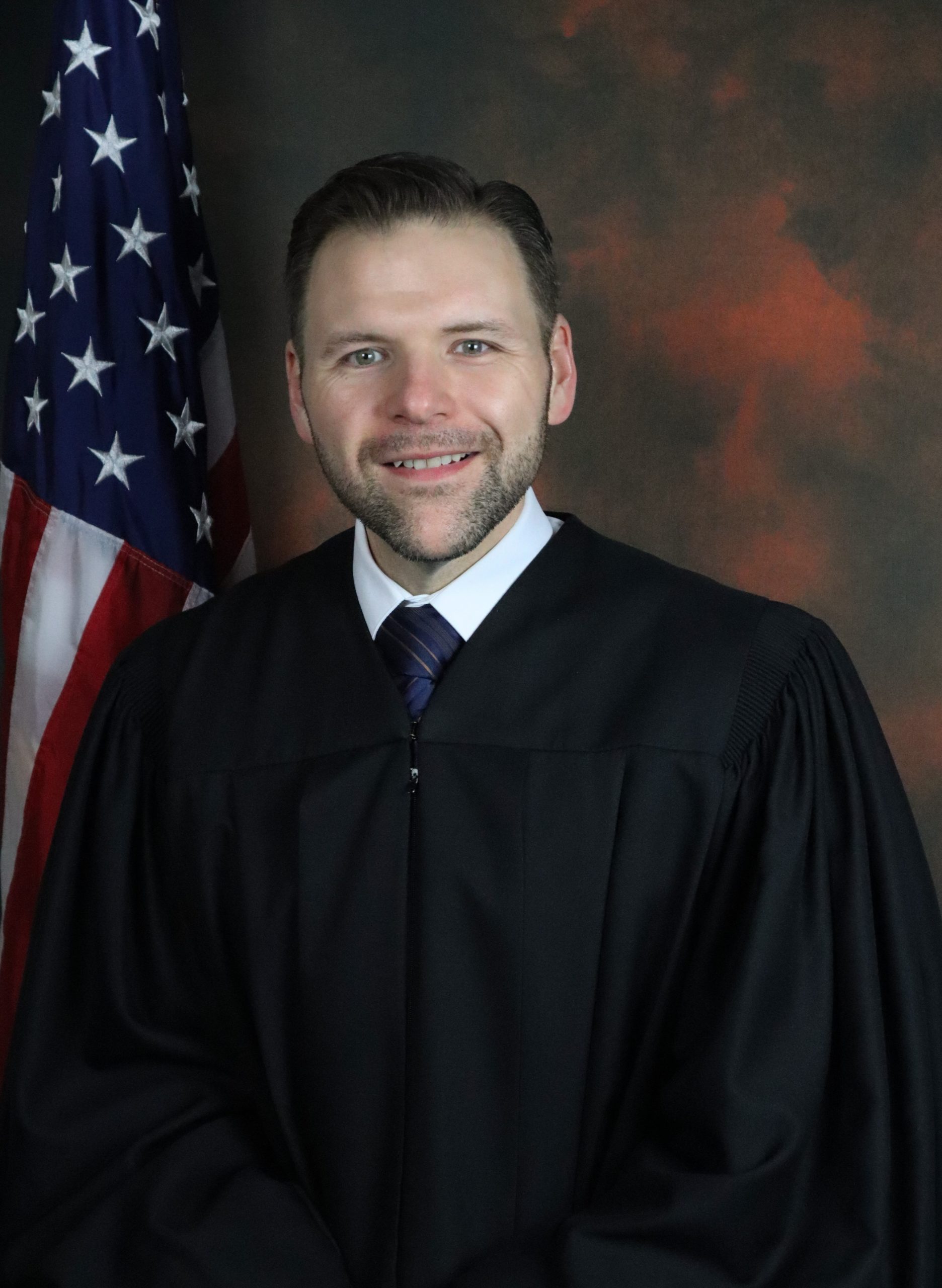
Judge Jason J. Nimeth
Individual Rules, Standing Orders & Policies
Limits & Logistics
Courtesy Copies
Continuance Motions
- Upon Filing
Courtesy copies
- Upon Filing
Notice Of Cause At Issue
Notice Of Hearing
- With Bundled Motion
Adjournments
- A motion to continue must state specific grounds for the requested continuance.
- A motion to continue must include opposing counsel’s position on the motion.
Request must include
Communication
Document Filing Requirements7 rules
Every proposed order must include a certificate of service complying with Florida Rule of General Practice and Procedure 2.516.
All proposed orders shall include a certificate of service in compliance with Florida Rule of General Practice and Procedure 2.516.
Document Type
Proposed Order
The proposed order’s certificate of service must use substantially similar language certifying that a true and correct copy was provided through electronic service and/or regular U.S. mail.
The certificate of service shall contain language substantially similar language to following: I HEREBY CERTIFY that a true and correct copy of the foregoing has been provided through electronic service and/or regular U.S. mail to the following parties.
Document Type
Proposed Order
A proposed order must automatically accompany the listed motions, including specified agreed, appointment, default, withdrawal, continuance, and other agreed motions, subject to the stated conditions.
A proposed order should automatically be submitted with the following motions: Agreed Motion for Extension of Time; Agreed Motion for Leave to Amend Complaint; Motion to Appoint Process Server; Agreed Motion to Appoint Guardian ad Litem; Motion to Appoint Attorney ad Litem; Motion for Default Final Judgment, if damages are liquidated; Motions to Withdrawal from Representation, if your client is consenting; Motions to Continue; or any other agreed motion between the parties.
Document Type
Motion
A Notice of Conflict must identify the conflicting case number and county and the judge presiding over the other case.
The Notice of Conflict shall contain at least the following information: the case number creating the conflicts with the county of the case and the name of the judge presiding over the other case.
Document Type
Notice Of Conflict
A proposed order should not be submitted until it is ready for immediate entry.
Orders should not be submitted unless ready for immediate entry.
Document Type
Proposed Order
An agreed proposed order must include “Agreed” at the beginning of its title.
If an order is agreed between the parties, the title of the order should include “Agreed” at the beginning of the title.
Document Type
Proposed Order
Evidence should be delivered to the Court only for virtual hearings.
Evidence should only be delivered to the Court for virtual hearings.
Document Type
Evidence
Filing & Service rules
Electronic Filing Rules
Proposed orders other than final foreclosure judgments and continuing writs of garnishment must be emailed to Audrey Hatcher in an editable document such as Microsoft Word.
All other proposed orders should be submitted through e-mail to Audrey Hatcher in an editable document such Microsoft Word.
Page 1 | Proposed Orders
Case law and memoranda of law may be submitted electronically to Audrey Hatcher for an upcoming hearing.
Any party desiring to submit case law and/or a memorandum of law for an upcoming hearing may submit these materials electronically to Audrey Hatcher.
Page 1 | Case Law and Memoranda
Filing Timing and Cure Windows
A Notice of Conflict must be filed immediately upon discovery of the conflict, with a courtesy copy to the Court.
This notice should be filed immediately upon discovery of the conflict with a courtesy copy to the Court.
Page 1 | Cancellation of Hearings, Motions to Continue, and Notice of Conflict
Physical binders, case law, and memoranda should be sent at least one week before the hearing.
Parties submitting binders, case law, and/or memoranda physically should make sure that the material sent at least one week in advance of the hearing.
Page 1 | Case Law and Memoranda
Case law and memoranda should be submitted at least ten days before the scheduled hearing.
The Court desires that these materials be submitted at least ten days prior to the scheduled hearing.
Page 1 | Case Law and Memoranda
Service and Proof of Service Rules
For a self-represented litigant not using e-filing portal service, the proposed order must provide for service by regular U.S. mail and a filed notice of service within five days after entry.
In cases involving a self-represented litigant who is not participating in electronic service through the e-filing portal, the proposed order must include language that the prevailing party will serve the order through regular U.S. mail on the self-represented party and certify said service through a filed notice of service within five (5) days of the entry of the order.
Page 1 | Proposed Orders
Courtesy Copy Requirements
The coordinating party must provide the Court a courtesy copy of the Notice of Hearing to finalize the hearing selection.
The coordinating party must provide the Court with a courtesy copy of the Notice of Hearing to finalize the hearing selection.
Page 1 | Scheduling a Hearing
The moving party must send the Court a courtesy copy with a proposed order when moving for a continuance.
The moving party shall send a courtesy copy to the Court with a proposed order.
Page 1 | Cancellation of Hearings, Motions to Continue, and Notice of Conflict
A movant who no longer wants to proceed with a scheduled hearing must file a Notice of Cancellation and provide a courtesy copy to the Court.
When a movant no longer desires to proceed with a scheduled hearing, the movant must file a Notice of Cancellation with a courtesy copy to the Court.
Page 1 | Cancellation of Hearings, Motions to Continue, and Notice of Conflict
A courtesy copy of the notice that the cause is at issue should be emailed to Audrey Hatcher.
A courtesy copy of the notice that the cause is at issue should be sent to Audrey Hatcher through e-mail.
Page 1 | Notice that Cause is at Issue
Adjournment & Extension Requirements
A motion to continue must include opposing counsel’s position on the motion.
Motions to continue shall also include the position of opposing counsel as to the motion.
Page 1 | Cancellation of Hearings, Motions to Continue, and Notice of Conflict
A motion to continue must state specific grounds for the requested continuance.
Motions to continue must set forth specific grounds for the request as general statements will be insufficient.
Page 1 | Cancellation of Hearings, Motions to Continue, and Notice of Conflict
Chambers Communication Rules
Parties must request hearings by email to Audrey Hatcher because hearings are not scheduled by telephone.
Parties requesting a hearing shall send an e-mail request to Audrey Hatcher as hearings are not scheduled by telephone.
Page 1 | Scheduling a Hearing
The cross-noticing permission email must identify the motion, existing hearing date and time, and opposing counsel’s position.
The e-mail shall include the name of the desired motion to be cross-noticed, the currently scheduled date and time of the existing hearing, and opposing counsel’s position on the request.
Page 1 | Cross-Noticing Hearings
The hearing-request email must copy all other parties and include the case number, county, motion name, and requested hearing duration.
The e-mail should be copied to all other parties in the action and include the case number, county where the case is pending, the name of the motion to be heard, and the total length of time requested.
Page 1 | Scheduling a Hearing
After all parties agree on a hearing date and time, the selection must be confirmed by email to Ms. Hatcher.
Only upon each party’s agreement to a specific date and time should you send an e-mail to Ms. Hatcher confirming the selection of a date and time.
Page 1 | Scheduling a Hearing
A party seeking permission to cross-notice a motion must email Audrey Hatcher and copy opposing counsel.
The requesting party shall request permission by contacting Audrey Hatcher through e-mail with opposing counsel copied.
Page 1 | Cross-Noticing Hearings