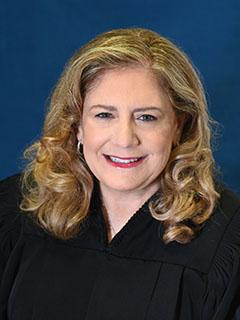
Judge Carolyn Bell
Individual Rules, Standing Orders & Policies
- Rules last changed:
Limits & Logistics
Document Limits
Courtesy Copies
Motion
Motion Materials
Courtesy copies
Court-wideE Filed Document
Court-wideAdjournments
- A motion to continue trial must be signed by the requesting party or supported by a court finding of good cause based on reasons stated at the hearing.
- A Special Set hearing may be reset only for good cause, lack of due diligence is not good cause, and absent an emergency the request must be made by motion setting a UMC hearing rather than by email.
- An ex parte motion to extend service time may proceed without a hearing only if filed before the service deadline and demonstrates good cause.
- +9 more
Request must include
Communication
Chambers
Clerk
Phone
Court-widePhone
Court-wideClerk
Phone
Court-wideDuty Judge
Phone
Court-wideChambers
Page & Word Limits3 rules
Although there is no strict page limit, motions, responses, and incorporated memoranda should rarely exceed five pages for UMC matters and 12 pages for Special Set matters.
While the Court has no strict page limitation, Motions, Responses and incorporated Memoranda of law should rarely exceed 5 pages for UMC and 12 pages for Special Set matters.
Umc Motion Response Or Memorandum
5 pages
Special Set Motion Response Or Memorandum
12 pages
For UMC hearings, parties should make best efforts to limit both motions and responses to five pages each.
As the issues raised at UMC hearings should be limited, the parties should make best efforts to restrict Motions and Responses to no more than 5 pages each.
Motion
5 pages
Response
5 pages
For Special Set matters, parties should make best efforts to limit both motions and responses to 12 pages each.
The parties should make best efforts to restrict Motions and Responses to no more than 12 pages each.
Motion
12 pages
Response
12 pages
Document Format Requirements5 rules
An order or judgment signature page must include part of the document's text.
No order or judgment shall contain a signature page that does not include a portion of the text of the order or judgment.
Proposed orders may not contain law-firm location information or internal codes in headers, footers, anchors, or watermarks, because such orders will be rejected.
Proposed Orders submitted to the Court must not have any Law Firm location information or internal codes included in the Order (including headers, footers, anchors, watermarks). The Court cannot process such Orders and they will be rejected and returned unsigned.
Public-record final orders must reserve a three-by-three-inch upper-right space, use one-inch margins, and have consecutively numbered pages.
All final orders that may be filed in the public records require a 3 x 3 inch available space in the right upper hand corner; one inch margin on all sides of documents; and pages must be consecutively numbered.
The Court prefers proposed orders to use Times New Roman 12-point font for compatibility with the online filing system.
The Court prefers Orders to be submitted in Times New Roman, 12 font, as that is the font most compatible with the Court's Online System.
A Special Set joint binder should ordinarily be no more than three inches thick.
In most cases, the Joint Binder should be no more than 3 inches.
Document Filing Requirements11 rules
Counsel for the parties must jointly prepare and file a short Notice of Compliance confirming compliance with paragraphs 1 and 2.
Counsel for the Parties shall jointly prepare and file a short Notice of Compliance confirming they have met the requirements of Para. 1 and 2 of this Order.
Document Type
Notice Of Compliance
Every order must include an accurate and complete service list.
All orders must include an accurate and complete service list.
Document Type
Order
Counsel and self-represented parties whose witnesses appear remotely must be able to use Zoom's Share Screen function for evidence presentation, impeachment, and refreshing recollection.
If witnesses are appearing remotely, counsel and self-represented parties must be able to use the Share Screen function of Zoom adeptly for evidence presentation, impeachment, and refreshing recollection.
Document Type
Motion
Every hearing notice must include a certificate of conferral documenting the prefiling conferral process, opposition's nonresponse, or that the conferral rules do not apply.
All hearing notices must include a certificate of conferral certifying that counsel for the movant has discussed the relief requested with opposing counsel, or certify that the opposing party did not respond describing with particularity all of the efforts undertaken to accomplish dialogue with the opposing party prior to filing the motion, or that the rules do not apply to their motion. Rule 1.202
Document Type
Notice Of Hearing
All motions should be scheduled within five days after filing for the earliest available date and must include the required meet-and-confer certification.
As directed in the DCMO's and in the Instructions on scheduling hearings above, all motions should be scheduled for hearing within five (5) days of filing, and set at the earliest date when counsel and the Court are available. All motions must include the meet and confer certification required Rule 1.202 and Local Rule 4.
Document Type
Motion
Unless directed otherwise, the movant must submit a post-hearing proposed order stating the hearing date and including the court's factual findings, legal conclusions, and rulings.
If the Court issues a ruling at a hearing, unless the Court directs otherwise, the movant shall submit a proposed Order. The Order must 1) state the date the hearing was held and 2) include the Court's factual findings and legal conclusions as well as the Court's rulings.
Document Type
Proposed Order
A unilateral case-management notice must identify the issues for the conference and list all pending motions, including motions that could not be coordinated.
The Notice of Hearing for Case Management Conference must comply with Rule 1.200, and must identify the specific issues to be addressed during the Case Management Conference and must also provide a list of all pending motions, including any motions which were not able to be coordinated.
Document Type
Notice Of Hearing
Final judgments for defendants should include the specified language that plaintiff take nothing and defendant go hence without day.
Final judgments in favor Defendants should contain the phrase "Plaintiff shall take nothing by this action and Defendant shall go hence without day."
Document Type
Final Judgment
A summary-judgment response should begin with clearly and separately referenced undisputed and disputed material facts, explain the basis for any dispute, and include the legal basis for denying relief.
Responses to Motions for Summary Judgment should begin with UNDISPUTED AND DISPUTED MATERIAL FACTS, clearly stated and separately referenced. Responses should specifically identify those facts claimed as disputed which movant claims are undisputed, and the basis for alleging they are disputed. Responses should also include the legal basis for denying relief.
Document Type
Response
A summary-judgment motion should begin with clearly and separately referenced undisputed material facts, followed by the legal basis for relief.
Motions for Summary Judgment should begin with UNDISPUTED MATERIAL FACTS, clearly stated and separately referenced, followed by the legal basis for summary judgment based upon those undisputed facts.
Document Type
Motion
Final judgments for plaintiffs should state the recovery amount and include the phrase “for which let execution issue.”
Final Judgments in favor of Plaintiffs should include the amount of recovery and contain the phrase "for which let execution issue."
Document Type
Final Judgment
Filing & Service rules
Electronic Filing Rules
UMC submissions are accepted only through E-Courtesy, except that documents submitted for in-camera review may be provided separately.
For UMC hearings, Division AF accepts submissions ONLY through E-Courtesy on the Court's Online System. The Court does not accept hard copies or courtesy emails of documents for UMC hearings, other than those presented for in camera review.
Page 1 | Submission of Materials for UMC Hearings
An order uploaded as an attachment cannot be processed and will be rejected and returned unsigned.
Orders uploaded as an attachment cannot be signed and processed and will be rejected and returned unsigned.
Page 1 | General Guidelines - Formatting
Reconsideration motions must be filed in the court's online system and copied by email to the judicial assistant with all parties copied.
All such Motions must be filed with the Court's Online System, with a copy sent via email to the JA at CAD-DivisionAF@pbcgov.org, with all parties copied.
Page 1 | Motions for Reconsideration, Clarification, Rehearing and New Trial
A party may unilaterally set a UMC case-management conference after at least six Special Set coordination attempts made at least 48 hours apart over at least two weeks, provided the notice includes proof of the attempts or good cause.
If a party is unable to coordinate a Special Set Hearing with all pertinent participants after at least six (6) attempts at least 48 hours apart over the course of at least two (2) weeks, the party may file a Notice of Hearing for Case Management Conference and unilaterally set a Case Management Conference on the Court's UMC docket. Proof of attempts to coordinate is required. If a unilateral Case Management Conference is set that does not include proof of attempts to coordinate within these time frames, absent good cause the Court will not hear the matter.
Page 1 | Failure to Coordinate - Scheduling Case Management Conferences Unilaterally
Duplicate proposed orders should not be uploaded, and proposed orders should not be sent by email or hard copy.
Please do not submit duplicate Orders to the Court's Online System, and do not email or submit hard copies of proposed Orders to the Court.
Page 1 | General Guidelines - Formatting
A party may unilaterally set a UMC case-management conference after at least four coordination attempts made at least 48 hours apart over at least one week, but must provide proof of those attempts or show good cause.
If a party is unable to coordinate a motion hearing on the UMC docket with all pertinent participants after at least four (4) attempts at least 48 hours apart over the course of at least one (1) week, the party may file a Notice of Hearing for Case Management Conference and unilaterally set a Case Management Conference on the Court's UMC docket. Proof of attempts to coordinate is required. If a unilateral Case Management Conference is set that does not include proof of attempts to coordinate within these time frames, absent good cause the Court will not hear the matter.
Page 1 | Failure to Coordinate — Scheduling Case Management Conferences Unilaterally
Filing Timing and Cure Windows
The Notice of Compliance must be filed within 15 days of the meet and confer; timely filing ends compliance obligations absent a party motion or court order, while late filing requires Plaintiff to notice a Rule 1.200(a) case-management conference addressing the noncompliance issues.
If the Report is filed within 15 days of the meet and confer, counsel for the parties need take no further action to comply with this Order, absent further motion by the parties or order of this Court. If the Notice of Compliance is not filed within 15 days of the meet and confer, Plaintiff shall notice a Case Management Conference pursuant to 1.200(a) for Uniform Motion Calendar to address the specific issues that have resulted in the lack of compliance.
Page 2 | Standing Order on Electronically Stored Information Discovery
Pretrial motions, including motions in limine, must be heard five days before calendar call.
Deadline to hear Pre-Trial Motions (i.e. Motions in Limine) 5 days before Calendar Call
Page 1 | FORECLOSURE TRIAL GRID
An answer must be filed or a default obtained within 140 days of filing.
Answer filed or default obtained 140 days from date of filing
Page 1 | FORECLOSURE TRIAL GRID
Discovery must be cut off 90 days before calendar call.
Discovery Cut-Off 90 days before Calendar Call
Page 1 | JURY TRIAL GRID
Service of the complaint must be completed within 120 days of filing, and any extension requires a court order.
Service of Complaint 120 days from date of filing; Service under extension is only by court order
Page 1 | FORECLOSURE TRIAL GRID
The joint pretrial stipulation must be filed 10 days before calendar call.
File Joint Pre-Trial Stipulation 10 days before Calendar Call
Page 1 | FORECLOSURE TRIAL GRID
All motions must be heard five days before calendar call.
Deadline to hear ALL Motions 5 days before Calendar Call
Page 1 | JURY TRIAL GRID
Summary judgment and Daubert motions must be filed 30 days before calendar call.
Filing Summary Judgment & Daubert Motions 30 days before Calendar Call
Page 1 | NON-JURY TRIAL GRID
Rebuttal witness lists must be filed 100 days before calendar call.
Rebuttal Witness Lists 100 days before Calendar Call
Page 1 | JURY TRIAL GRID
Jury instructions and the verdict form must be submitted three days before calendar call.
Jury Instructions and Verdict Form 3 days before Calendar Call
Page 1 | JURY TRIAL GRID
Defensive and certain other motions that would prevent the case from being at issue must be set for hearing within five days of filing and scheduled at the earliest mutually available date.
The parties must expeditiously address any motions directed to the pleadings. Defensive motions under Rule 1.140 of the Fla. R. Civ. P., motions to extend time to file a defensive motion or pleading, and any other motion preventing the matter from being at issue shall be set for hearing within five (5) days of filing. The motion should be scheduled for hearing at the earliest date that the Court and parties are available.
Page 1 | JURY TRIAL GRID
All motions or objections directed to the pleadings must be resolved within 190 days of filing.
Resolution of all motions/objections directed to the pleadings (i.e. motions to dismiss or strike)* 190 days from date of filing
Page 1 | FORECLOSURE TRIAL GRID
Expert witnesses and compulsory examinations must be completed 45 days before calendar call.
Expert Witnesses and Compulsory Examinations 45 days before Calendar Call
Page 1 | NON-JURY TRIAL GRID
Witness and exhibit lists must be filed 120 days before calendar call.
Witness & Exhibit Lists 120 days before Calendar Call
Page 1 | JURY TRIAL GRID
Witness and exhibit lists must be filed 45 days before calendar call.
Witness & Exhibit Lists 45 days before Calendar Call
Page 1 | NON-JURY TRIAL GRID
All motions or objections directed to the pleadings must be resolved and pleadings closed within 180 days of filing.
Resolution of all motions/objections directed to the pleadings (i.e. to dismiss or strike) and pleadings closed * 180 days from filing
Page 1 | NON-JURY TRIAL GRID
Discovery must be cut off 30 days before calendar call.
Discovery Cut-Off 30 days before Calendar Call
Page 1 | NON-JURY TRIAL GRID
Pleading amendments and adding parties are due within 180 days of filing.
Pleading Amendments/ Adding parties 180 days from filing
Page 1 | JURY TRIAL GRID
Expert witnesses and compulsory examinations must be completed 120 days before calendar call.
Expert Witnesses and Compulsory Examinations 120 days before Calendar Call
Page 1 | JURY TRIAL GRID
Pleading amendments and adding parties must be completed within 150 days of filing.
Amendment of pleadings/adding parties 150 days from date of filing
Page 1 | FORECLOSURE TRIAL GRID
Witness and expert lists must be filed 45 days before calendar call.
File Witness and Expert Lists 45 days before Calendar Call
Page 1 | FORECLOSURE TRIAL GRID
Summary judgment and Daubert motions must be filed 90 days before calendar call.
Filing Summary Judgment & Daubert Motions 90 days before Calendar Call
Page 1 | JURY TRIAL GRID
Dispositive motions, including motions for summary judgment, must be heard five days before calendar call.
Deadline to hear Dispositive Motions (i.e. Motions for Summary Judgment) 5 days before Calendar Call
Page 1 | FORECLOSURE TRIAL GRID
Discovery must be closed 30 days before calendar call.
Close of discovery 30 days before Calendar Call
Page 1 | FORECLOSURE TRIAL GRID
The trial-ready date is the calendar call date.
Trial Ready Date Calendar Call date
Page 1 | JURY TRIAL GRID
Service of the complaint must be completed within 120 days of filing, and any extension requires a court order.
Service of Complaint 120 days from filing; Service under extension is only by court order.
Page 1 | JURY TRIAL GRID
Rebuttal witness lists must be filed 35 days before calendar call.
Rebuttal Witness Lists 35 days before Calendar Call
Page 1 | NON-JURY TRIAL GRID
The calendar call and trial-ready date are the calendar call date.
Calendar Call/Trial Ready Date ** Calendar Call date
Page 1 | FORECLOSURE TRIAL GRID
All motions or objections directed to the pleadings must be resolved and pleadings closed within 250 days of filing.
Resolution of all motions/objections directed to the pleadings (i.e. to dismiss or strike) and pleadings closed * 250 days from filing
Page 1 | JURY TRIAL GRID
Exhibit lists must be filed 25 days before calendar call.
File Exhibit Lists 25 days before Calendar Call
Page 1 | FORECLOSURE TRIAL GRID
A discovery motion extending a deadline or modifying discovery obligations must be filed before the affected deadline expires.
Discovery Motions seeking to extend deadlines or modify discovery obligations must be filed prior to the expiration of the deadline.
Page 1 | Discovery Disputes
Unless the court directs otherwise, the party responsible for the proposed order must circulate a draft to all counsel and self-represented parties within 48 hours after the hearing.
Unless the Court orders otherwise, within 48 hours of the hearing, the party directed to prepare the proposed Order must send a draft to all counsel and self-represented parties.
Page 1 | Orders Submitted Following a Hearing
When parties cannot agree on an order's form, all competing proposed orders must be uploaded within 72 hours after the hearing unless the court directs otherwise.
If the parties cannot agree on the form of the Order, unless the Court orders otherwise all competing proposed Orders must be uploaded in the Court's Online System within 72 hours of the hearing.
Page 1 | Orders Submitted Following a Hearing
A summary-judgment response is due no later than 40 days after the motion, and its hearing generally must be set at least 10 days after that response deadline unless the parties stipulate or the court orders otherwise.
Under amended Rule 1.510, Responses are due no later than forty (40) days after the filing of the Motion. Any hearing must be set at least ten (10) days after the deadline for the filing of the Response, unless the parties stipulate or the Court orders otherwise.
Page 1 | Motions for Summary Judgment
After conferring, the movant must schedule every contested nondispositive motion for hearing within five days after filing.
As required under the DCMO's, after the parties have met and conferred, the movant must schedule for hearing all contested, non-dispositive motions within five (5) days of filing.
Page 1 | Movant To Schedule Motions for Hearing Within Five (5) Days
A nunc pro tunc motion seeking relief after the service deadline has expired must be set for hearing.
Motions seeking relief nunc pro tunc, after expiration of the deadline for service, must be set for hearing.
Page 1 | Motions to Extend Time for Service
Dismissal papers must be uploaded within 30 days after settlement; otherwise, a motion must request additional time, explain the delay, and state when closure is expected.
Dismissal papers must be uploaded to the Court's Online System within 30 days of settlement or the parties shall file a Motion requesting additional time and reporting to the Court what is preventing the case from being closed out and when the parties anticipate case closure.
Page 1 | Settlement, Dismissal or Stay of Cases
When the court does not rule at the hearing but directs preparation of competing orders, the orders must be uploaded within 72 hours after the hearing unless the court directs otherwise.
If the Court does not rule at the hearing and directs the parties to prepare competing proposed orders, unless the Court orders otherwise all competing proposed Orders must be uploaded within 72 hours of the hearing.
Page 1 | Orders Submitted Following a Hearing
The pretrial meet-and-confer must occur 15 days before calendar call.
Pre-Trial Meet & Confer 15 days before Calendar Call
Page 1 | NON-JURY TRIAL GRID
Deposition designations must be filed 10 days before calendar call.
Deposition Designations 10 days before Calendar Call
Page 1 | NON-JURY TRIAL GRID
Deposition designations must be filed 20 days before calendar call.
Deposition Designations 20 days before Calendar Call
Page 1 | JURY TRIAL GRID
The pretrial meet-and-confer must occur 30 days before calendar call.
Pre-Trial Meet & Confer 30 days before Calendar Call
Page 1 | JURY TRIAL GRID
Mediation must be completed 10 days before calendar call.
Deadline for Mediation 10 days before Calendar Call
Page 1 | JURY TRIAL GRID
UMC matters generally must be scheduled at least five days before the hearing unless the parties agree to shorter notice or the matter is ex parte.
Unless the parties have agreed to shorter notice or the matter is ex parte, all UMC matters must be scheduled at least five (5) days in advance of the hearing.
Page 1 | Uniform Motion Calendar ("UMC")
Both electronic and hard-copy materials for Special Set hearings should be submitted at least five days before the hearing.
All materials, both E-Courtesy and hard copies, should be submitted at least five (5) days before each hearing
Page 1 | Submission of Materials for Special Set Hearings
UMC hearing materials should be uploaded through E-Courtesy at least three days before the hearing.
At least three (3) days before each hearing, please upload in E-Courtesy copies of:
Page 1 | Submission of Materials for UMC Hearings
A written response to a Daubert motion is strongly encouraged and should be filed within 10 days after the motion.
Written Responses to any Daubert Motion are strongly encouraged, and should be filed no later than ten (10) days after the Motion is filed.
Page 1 | Daubert Motions
Service and Proof of Service Rules
Plaintiff must serve a certified copy of the order on Defendant through the Sheriff’s office or a certified process server and file the return of service with the Clerk of Court at least 10 days before the hearing.
It shall be Plaintiff’s responsibility to secure service of a certified copy of this Order upon Defendant through the Sheriff’s office or a certified process server and the return of service shall be filed with the Clerk of Court at least 10 days before the hearing.
Page 1 | ORDER TO SHOW CAUSE
Plaintiff must serve the standing order on Defendant's counsel within 20 days after counsel first appears.
Plaintiff shall serve this Order upon counsel for Defendant within 20 days of the first appearance of counsel for Defendant
Page 1 | Standing Order on Electronically Stored Information Discovery
A submitted document requiring service on an unregistered or self-represented party must state that the movant is required to furnish the order by U.S. mail and has done so.
Documents submitted which require service to an unregistered or self-represented party must indicate that the movant is required to furnish the order via US Mail, and has done so.
Page 1 | E-Service for Proposed Orders
Judicial electronic service covers persons registered for primary and secondary email addresses; filing a notice of email designation is insufficient, and registration in the court's online system is required.
Orders are electronically served to all attorneys/parties that have registered their primary and secondary e-mail addresses with the 15th Circuit. Please ensure that you have registered with the Court's Online System. NOTE: THE FILING OF A "NOTICE OF E-MAIL DESIGNATION" DOES NOT REGISTER YOU FOR JUDICIAL E-SERVICE. YOU MUST REGISTER WITH THE COURT'S ONLINE SYSTEM.
Page 1 | E-Service for Proposed Orders
Courtesy Copy Requirements
Temporary injunction motions should be filed through the ordinary clerk process, not routinely as emergencies, with a courtesy copy and all attachments sent to the judicial assistant.
Temporary Injunctions should not be routinely filed as emergencies. Parties should file their Temporary Injunction with the Clerk of Court through ordinary course and send a courtesy copy with all exhibits/attachments to the JA.
Page 1 | Motions for Temporary Injunctions
For Special Set matters, the Court appreciates E-Courtesy and hard copies, directs electronic submissions through the online system, allows hard copies by mail or hand delivery, and does not accept courtesy emails unless specifically requested.
The Court appreciates both E-Courtesy and hard copies of all materials in support of Specially Set Matters. (Please note: this is different from UMC hearings where only E-Courtesy is accepted.) Unless specifically requested by the Court, the Court does not accept courtesy copies of any documents for Special Set Hearings via email. Electronic copies should be submitted via E-courtesy on the Court's Online System Please provide hard copies to chambers by postal system (USPS, Fed-Express, UPS etc.) or hand delivered to the 1st floor drop-box.
Page 1 | Submission of Materials for Special Set Hearings
Sealing & Redaction Procedures
Bank account numbers, Social Security numbers, health information, and similar confidential information must be removed from evidentiary documents provided to the court.
If you wish to introduce evidence at a hearing, confidential information (such as Bank Account Numbers, Social Security Numbers, Health Information, etc.) must be removed from documents provided to the Court as required by Florida Rules of General Practice and Judicial Administration (floridabar.org) Rule 2.420 Rule 2.425 and 15th Judicial Circuit Admin. 2.303-1/23*.
Page 1 | Evidentiary Special Set Hearings
Circuit civil, county civil, and small-claims filers are responsible for ensuring confidential information is redacted or identified for redaction.
Redaction of Confidential Information — As of July 1, 2021 all filers of circuit civil, county civil, and small claims court documents are now solely responsible for ensuring that confidential information is redacted or is identified for redaction.
Page 1 | Confidential Information
Filing Bundling Requirements
Each order must be uploaded separately; multiple orders in one submission will be rejected.
When uploading multiple orders, please upload each order individually. The Court cannot process multiple Orders in a single submission, and they will be rejected and returned unsigned.
Page 1 | General Guidelines - Formatting
Each consolidated case requires its own proposed order, even when identical, and all pertinent orders should be submitted simultaneously across the consolidated cases.
Consolidated cases, even those consolidated for all purposes, require separate proposed orders in each case. In most situations, the parties will need to submit identical orders for filing in each consolidated case. Please submit all pertinent orders simultaneously in all consolidated cases.
Page 1 | Consolidated Cases
For Special Set hard copies, parties are encouraged to submit one joint binder containing all pertinent materials, ordinarily no more than three inches thick.
With Hard Copies, it is most helpful to the Court for the parties to submit one Joint Binder with all pertinent materials for the Court's consideration. In most cases, the Joint Binder should be no more than 3 inches.
Page 1 | Submission of Materials for Special Set Hearings
Adjournment & Extension Requirements
A motion to continue trial must be signed by the requesting party or supported by a court finding of good cause based on reasons stated at the hearing.
As required by Fl.R.Civ. P. 1.460(b), [PICK ONE - the Motion was signed by the named party requesting the continuance/the Court finds there is good cause that the Motion was not signed by the named party requesting the continuance based on the reasons set forth at the hearing, specifically [ADD IN FACTUAL BASIS OF GOOD CAUSE FOR NO SIGNATURE OF REQUESTING PARTY].
Page 1 | Order on Rule 1.460 Motion to Continue Trial, Re-Setting Trial and Amending Case Management Deadlines
A request to extend a Daubert-motion deadline must be filed before that deadline and set for hearing.
Requests to extend the deadlines for the filing of Daubert Motions must be filed prior to the deadlines, and set for hearing.
Page 1 | Daubert Motions
Every motion seeking removal of a case from the trial docket requires a hearing, regardless of its label or whether it is agreed or unopposed.
As required under the DCMO's, the Court requires a hearing on all Motions that seek to remove a case from a currently scheduled trial docket, no matter how the Motion is styled, and regardless of whether the Motion is agreed or unopposed.
Page 1 | Motions to Continue Trial
Deadline-extension motions must be filed before the deadline and will be denied if untimely absent compelling circumstances and good cause.
All motions to extend deadlines must be filed prior to the deadline. Untimely motions will be denied absent compelling circumstances and a showing of good cause.
Page 1 | Motions for Modifications and Extensions of Deadlines of Case Management Orders Other than Trial/Calendar Call
Agreements extending summary-judgment or Daubert motion deadlines or discovery completion must be set for hearing, with parties ready to explain why the extension will not affect the calendar-call date.
Agreements to extend the dates for the filing of Summary Judgment and Daubert Motions, or for completion of all discovery, must be set for hearing, and the parties must be prepared to address how the proposed extension will not affect the Calendar Call date.
Page 1 | Motions for Modifications and Extensions of Deadlines of Case Management Orders Other than Trial/Calendar Call
A request to extend a summary-judgment motion or response deadline must be set for hearing, and a summary-judgment motion filed after the DCMO deadline will be denied.
Any requests to extend the deadlines for filing a Motion for Summary Judgment or Response must be set for hearing. Motions for Summary Judgment filed after the deadline set in the DCMO will be denied.
Page 1 | Motions for Summary Judgment
Trial continuances are disfavored and granted only for good cause; successive continuances and lack of due diligence do not support a continuance.
Motions to Continue Trial are disfavored and will rarely be granted and then only upon good cause shown. Successive continuances are highly disfavored. Lack of due diligence in preparing for trial is not grounds to continue the case.
Page 1 | Motions to Continue Trial
A motion to continue trial must be filed promptly after good cause first appears, and delay in requesting it may result in denial.
Motions to Continue Trial must be filed promptly after the appearance of good cause to support such motion. Failure to promptly request a continuance may be a basis for denying the motion for continuance.
Page 1 | Motions to Continue Trial
Every trial-continuance motion must specifically state the cause and timing, opposition, enabling actions and dates, proposed trial-ready date, good-cause facts, revised pretrial deadlines, and proposed reset calendar-call date.
All Motions to Continue Trial, even if agreed, must state with specificity: the basis of the need for the continuance, including when the basis became known to the movant; whether the motion is opposed; the action and specific dates for the action that will enable the movant to be ready for trial by the proposed date, including, but not limited to, confirming the specific date any required participants such as third-party witnesses or experts are available; and the proposed date by which the case will be ready for trial and whether that date is agreed by all parties. In addition, every Motion to Continue Trial must also include: the factual basis evidencing good cause for the continuance; proposed amended pretrial deadlines for all remaining matters; and a proposed reset calendar call date.
Page 1 | Motions to Continue Trial
An ex parte motion to extend service time may proceed without a hearing only if filed before the service deadline and demonstrates good cause.
Ex parte Motions to extend time to serve process do not need to be set for hearing if they are filed prior to the deadline for service and show the following for good cause:
Page 1 | Motions to Extend Time for Service
A motion extending a deadline or amending a case-management order must state the basis and when it became known, opposition status, the requested date and agreement status, and the specific actions and dates needed to meet the new deadline.
Any motion to extend a deadline or amend a case management order, must specify: the basis of the need for the extension, including when the basis became known to the movant; whether the motion is opposed; the specific date to which the movant is requesting the deadline be extended, and whether that date is agreed by all parties; and the action and specific dates for the action that will enable the movant to meet the proposed new deadline, including, but not limited to, confirming the specific date any required participants such as third-party witnesses or experts are available.
Page 1 | Motions for Modifications and Extensions of Deadlines of Case Management Orders Other than Trial/Calendar Call
A Special Set hearing may be reset only for good cause, lack of due diligence is not good cause, and absent an emergency the request must be made by motion setting a UMC hearing rather than by email.
Special Set hearings will not be reset or continued absent good cause. Good cause does not include a lack of due diligence. If the parties wish to reset a hearing prior to the scheduled date, they may make the request via Motion which details the good cause for the continuance, and set the Motion to Continue Hearing for UMC hearing. Absent an emergency, the parties shall not send emails seeking to continue or reset a hearing to the Division.
Page 1 | Canceling Special Set Hearings
Chambers Communication Rules
The Court does not accept ex parte communications by telephone.
The Court does not accept ex parte communications via email or by telephone.
Page 1 | Communication With Chambers
Substantive issues must be raised by motion rather than raised with the judicial assistant.
All substantive issues are handled by the Court via Motion. Please file a Motion and do not contact the JA about any substantive matters.
Page 1 | Communication With Chambers
The Court does not accept ex parte communications by email or telephone and directs any such communication to be resent by email with all parties copied.
The Court does not accept ex parte communications via email or by telephone. The JA will direct anyone who contacts chambers ex parte to send an email with all parties copied.
Page 1 | Communication With Chambers
Immediately after settlement, voluntary dismissal, or stay, counsel must email the judicial assistant with all parties copied and identify future hearings or trials that should be canceled.
If your case settles, is voluntarily dismissed, or stayed, please immediately contact the JA via email at CAD-DivisionAF@pbcgov.org, with all parties copied. Please advise of any future hearings or trials scheduled on the Court's docket, so they can be canceled and the time made available for other cases.
Page 1 | Settlement, Dismissal or Stay of Cases
When electronic service on the court is authorized, the filing must be emailed to chambers with all parties copied and must identify the legal basis for electronic service.
For those limited issues for which service on the Court is required and for which electronic service is allowed, please send via email to CAD-DivisionAF@pbcgov.org, with all parties copied. Your cover email should include the legal basis upon which you are relying for the need for electronic service.
Page 1 | Communication With Chambers
Parties may email the judicial assistant for additional UMC slots only after confirming that no online slots are available, and the email must copy all parties.
In the event there are no online slots available in the Court's Online System, you will receive a prompt advising that you may contact the JA via email at CAD-DivisionAF@pbcgov.org, with all parties copied, for additional UMC timeslots. Please do not contact the JA until after you have confirmed in the Court's Online System that there are no slots available for your hearing.
Page 1 | Scheduling UMC Hearings
Chambers communications are limited to hearing-scheduling and related issues, must be emailed to JA Perry with all parties copied, and must identify any judicial direction relied upon and when it was given.
Unless otherwise specifically directed by the Court, communication with chambers on case-related matters is limited to scheduling hearings and related issues. If the Court has directed the parties to send an email to chambers, please indicate in the email exactly what direction was given and when. All communications must be via email to JA Perry at CAD-DivisionAF@pbcgov.org, with all parties copied and otherwise in accord with the instructions on setting hearings set forth below.
Page 1 | Communication With Chambers
Junior Lawyer Participation Incentives
The Court encourages argument opportunities for less-experienced lawyers, asks lead counsel to identify an attorney with seven or fewer years of experience before the hearing, and permits multiple lawyers to argue an issue when a less-experienced lawyer is presenting.
Judge Bell has a strong commitment to supporting the development of our next generation of lawyers. The Court encourages parties and senior attorneys to allow less-experienced practitioners the opportunity to argue in court. Lead Counsel should advise the Court prior to the beginning of a hearing if a lawyer of seven (7) or fewer years of experience will be arguing a matter. Ordinarily, only one lawyer for each party may argue at a hearing. In the event a less experienced lawyer is presenting, the Court will allow multiple lawyers to argue on an issue.
Page 1 | Next Generation Lawyers