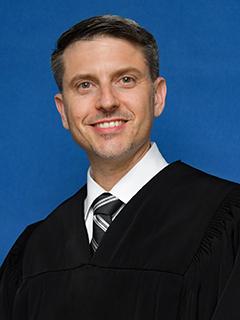
Judge Scott Ryan Kerner
Individual Rules, Standing Orders & Policies
- Rules last changed:
Limits & Logistics
Document Limits
Courtesy Copies
Courtesy copies
- 10 Business Days Before Hearing
Motions In Limine Motions
Special Set Documents
Special Set Materials
- At Least 10 Days Before Hearing
Adjournments
- Requests to extend summary-judgment motion or response deadlines must be set for hearing.
- A request to extend a Daubert-motion deadline must be filed before the deadline and set for hearing.
- Deadline-extension motions must be filed before the deadline and may be denied if untimely absent compelling circumstances and good cause.
- +19 more
Request must include
- A trial-continuance motion and DCM conference must be set within 30 days of service on the last defendant, or as soon as the triggering circumstances become known, and only for good cause.
- A trial continuance motion must be signed by the client, filed and have a DCM conference set within 30 days of service on the last defendant or when the need for continuance becomes known, and be based on good cause.
Communication
Phone
Clerk
Phone
Chambers
Clerk
Phone
Court-wideDuty Judge
Phone
Court-wideChambers
Page & Word Limits1 rule
Motions and responses in Special Set matters should each be limited to 12 pages.
The parties should make best efforts to restrict Motions and Responses to no more than 12 pages each.
Motion
12 pages
Opposition
12 pages
Document Format Requirements32 rules
Exhibits must be bound using staples, Acco-type fasteners, or similar binding; spiral binders, clips, and rubber bands are prohibited.
Exhibits MUST BE bound; i.e. Staples, Acco-type fasteners, etc. Please NO spiral binders. Clips and Rubber Bands NOT ALLOWED.
Each exhibit must have a numbered sticker on the upper-right corner of its front identifying it as a Plaintiff or Defendant exhibit.
Place a numbered sticker on the top right hand corner of the front of each exhibit clearly identifying Plaintiff or Defendant.
Loose photographs are not accepted; each photograph must be individually marked and mounted.
Loose photographs are NOT accepted, Photos MUST be individually marked and mounted,
Depositions and pleadings are not marked as exhibits, but all materials to be entered into evidence, including pleadings and documents for judicial notice, must be pre-marked.
Deposition(s) and Pleading(s) are NOT marked as exhibits. However, all exhibits that will be entered into evidence must be pre-marked including, but, not limited to, pleadings, documents etc., that a party will request to be judicially noticed.
Proposed orders must not contain law-firm location information or internal codes in headers, footers, anchors, or watermarks.
Proposed Orders submitted to the Court must not have any Law Firm location information or internal codes included in the Order (including headers, footers, anchors, watermarks).
Public-record final orders must reserve a three-by-three-inch space in the upper-right corner, use one-inch margins, and have consecutively numbered pages.
All final orders that may be filed in the public records require a 3 x 3 inch available space in the right upper hand corner; one inch margin on all sides of documents; and pages must be consecutively numbered.
The proposed jury instructions and verdict form must be submitted in Microsoft Word format at least 3 days before trial.
A joint set of proposed jury instructions and a proposed verdict form must be provided to the court no less than 3 days BEFORE TRIAL in a printed form appropriate for submission to the jury and in Microsoft Word format.
DOCX
A completed Trial Form must be attached to the courtesy copy of the foreclosure trial notice.
The completed Trial Form must be attached to the courtesy copy.
A large demonstrative board intended for admission into evidence must be accompanied by a smaller version.
Large demonstrative boards that you want placed into evidence must be accompanied by a smaller version.
Every exhibit intended for admission into evidence must be pre-marked with the required Tag/Template.
All exhibits that will be entered into evidence must be pre-marked using the Tag/Template
Exhibits on the exhibit list must be numbered sequentially.
The exhibit list must be numbered sequentially.
Each exhibit must have an Exhibit Tag/Template on its back, applied either by taping copies to the exhibit or using Avery 5164 labels.
On the back of each exhibit, place an Exhibit Tag/Template (see attached tag/template form) Either i. Make copies of the exhibit tag(s) and tape one tag on the back of each exhibit, or ii. Use Avery labels 5164 which can then be placed adhered to the page.
Depositions and pleadings ordinarily are not marked as exhibits, but a document or pleading for which judicial notice is sought or that is published to the jury must be marked for identification using the Tag/Template.
Deposition(s) and Pleading(s) are NOT marked as exhibits, EXCEPT, When any document or pleading that the party would like the court to take judicial notice of or is published to the jury. These exhibits must be marked for ID by using the Tag/Template.
Exhibits must be securely bound with staples, Acco-type fasteners, or a binder, and may not be held together with clips or rubber bands.
Exhibits MUST be bound; i.e., Stapled, Acco-type fasteners, etc. Binders. Clips and Rubber Bands ARE NOT ALLOWED.
Each exhibit must bear a numbered sticker on the upper-right front corner that clearly identifies Plaintiff or Defendant.
Place a numbered sticker on the top right-hand corner of the front of each exhibit clearly identifying Plaintiff or Defendant.
Loose photographs are prohibited; each photograph must be individually marked and mounted.
Loose photographs are NOT accepted. Photos MUST be individually marked and mounted.
The Clerk's Office will fax an exhibit tag/template, and a copy must be taped on the back of each exhibit.
An Exhibit Tag/Template will be faxed to you by the Clerk's Office. Make copies of exhibit tag(s) and tape one on the back of each exhibit.
Each large demonstrative board placed into evidence must be accompanied by a smaller version.
Large demonstrative boards that you placed into evidence must be accompanied by a smaller version.
Multiple orders must be uploaded individually rather than in one submission.
When uploading multiple orders, please upload each order individually.
Unless a requesting party agrees otherwise in writing, ESI must be produced in native data format with all associated metadata.
Unless otherwise agreed to in writing by a requesting party, ESI shall be produced in native data format, together with all associated metadata.
Requested structured database data must be extracted with appropriate queries and returned in a verifiably responsive, readable form and format using commonly available tools.
Where structured data (e.g., data from a database) is requested, appropriate queries will be used to extract relevant data from any such database, which data shall match specified criteria, and returning specified fields, in a form and format that is verifiably responsive and readable by the use of commonly available tools.
When native production is impossible or inadvisable, each page must be produced as a single-page TIFF image with a accompanying multipage searchable TXT file containing text and metadata, plus associated load files.
In such cases where production in native format is not possible or advisable (e.g., redacted documents), native format files shall be converted to static images and each page thereof saved electronically as a single-page "TIFF" image that reflects how the source document would have appeared if ===== PAGE 14 ===== printed out to a printer attached to a computer viewing the file. Accompanying this TIFF shall be a multipage text (.TXT) file containing searchable text from the native file, and the metadata as discussed later in this document. Load files of the static images should be created and produced together with their associated static images to facilitate the use of the produced images by a document management or litigation support database system.
Electronically stored information must be produced in its native format as it exists in the producing party's computer system.
The parties agree that production will be made in native format, as the ESI exists on the producing party's computer system.
Documents or records existing only in physical hard-copy form, including former ESI, must be converted to single-page TIFF files and produced under the stated protocols or as otherwise agreed by the parties.
Documents or records which either were originally generated or instantiated as ESI but now only exist in physical hard-copy format, or documents or records that were originally generated in hard-copy format shall be converted to a single page .TIFF file and produced following the same protocols set forth herein or otherwise agreed to by the parties.
Documents not produced natively must be saved page by page as image files while preserving the original unitization of pages, attachments, and affixed notes.
For file or records not produced in their native format, each page of a document shall be electronically saved as an image file. If a document consists of more than one page, the unitization of the document and any attachments and/or affixed notes shall be maintained as it existed in the original when creating the image files.
For files not produced in their native format, extracted text must be provided in ASCII format, labeled, produced on Production Media, and named using the corresponding document's first-page Bates number followed by “.txt.”
**I. Electronic Text Files.** For files not produced in their native format, text files for produced documents shall be produced reflecting the full text that has been electronically extracted from the original, native electronic files (“Extracted Text”). The Extracted Text shall be provided in ASCII text format and shall be labeled and produced on Production Media in accordance with the provisions of paragraph II.H above, “Production Media.” The text files will be named with the unique Bates number of the first page of the corresponding document followed by the extension “.txt.”
Documents must be produced on CD-ROM, DVD, an external hard drive with a standard PC-compatible interface, or other readily accessible computer or electronic media agreed upon by the parties.
**H. Production Media.** Documents shall be produced on CD-ROM, DVD, external hard drive (with standard PC compatible interface), or such other readily accessible computer or electronic media as the parties may hereafter agree upon (the “Production Media”).
When producing discoverable database information instead of the database itself, the parties must meet and confer, agree on relevant queries, and generate a reasonably usable and exportable electronic report.
To the extent a response to discovery requires production of discoverable electronic information contained in a database, in lieu of producing the database, the parties agree to meet and confer to, with an understanding of which fields are relevant, agree upon a set of queries to be made for discoverable information and generate a report in a reasonably usable and exportable electronic file (e.g., Excel or CSV format) for review by the requesting party or counsel.
Exhibits must be pre-marked and numbered consistently with the clerk's civil-evidence guidelines.
All exhibits must be pre-marked and numbered consistent with Clerk's guidelines:www.mypalmbeachclerk.com/departments/courts/evidence-guidelines/civil-evidence.
Exhibits with multiple sections should use number-and-letter designations such as 1a, 1b, and 1c.
Any exhibit(s) with multiple sections should be designated by number and letter; i.e. 1a, 1b, 1c, etc.
Cases and legal authorities must be tabbed, with pertinent sections highlighted.
all cases and legal authorities shall be tabbed with pertinent sections highlighted.
Counsel and parties of record must clearly mark copies of exhibits and key language for both the court and opposing counsel.
All counsel and parties of records must clearly mark a copy of exhibits and key language for the Court and for opposing counsel
Document Filing Requirements62 rules
Attorneys must identify each exhibit objection and its basis in a written list presented to the court before trial.
The attorneys shall review all exhibits prior to trial and note any remaining objections in writing. A list of written objections identifying the exhibit and the basis for the objection shall be presented to the Court prior to trial.
Document Type
Exhibit Objection List
An exhibit objection not presented before trial is deemed waived.
OBJECTIONS NOT PRESENTED SHALL BE DEEMED WAIVED.
Document Type
Exhibit Objection List
At jury selection, attorneys must present agreed jury instructions and verdict forms and separate plaintiff and defendant objection packets to the court.
At the time of jury selection, the attorneys will present jury instructions and verdict forms to the Court in the following form:
Document Type
Jury Instructions And Verdict Forms
One week before jury selection, the parties must provide all deposition transcripts containing unresolved objections, together with a cover sheet stating the anticipated trial order and the page and line of each objection.
For those that cannot be ===== PAGE 2 ===== resolved the parties shall provide to the Court, **one (1) week prior to jury selection**, transcripts of all depositions at issue along with a cover sheet reflecting the anticipated order of use at trial of the various transcripts and the page and line where each objection appears.
Document Type
Deposition Transcripts
An exhibit list may not use the terms "all," "any," or "any and all."
Exhibit lists which state "all," "any,” and "any and all” are not accepted.
Document Type
Exhibit List
The exhibit list must use sequential numbering.
The exhibit list must be numbered sequentially.
Document Type
Exhibit List
An updated, legible, and specific exhibit list must be provided to the trial clerk on the first day of trial.
An updated, legible and specific exhibit list MUST be provided to the trial clerk on the first day of trial.
Document Type
Exhibit List
The prevailing party must file Form 1.998, the Final Disposition Form, with the court.
This form shall be filed by the prevailing party for the use of the Clerk of Court for the purpose of reporting judicial workload data pursuant to Florida Statutes section 25.075.
Document Type
Final Disposition Form
A case-management-conference notice must identify the issues to be addressed and list all pending motions, including uncoordinated motions.
The Notice of Hearing for Case Management Conference must comply with Rule 1.200. As such, it must identify the specific issues to be addressed during the Case Management Conference and must also provide a list of all pending motions, including any motions which were not able to be coordinated.
Document Type
Notice Of Hearing For Case Management Conference
Every order must include an accurate and complete service list.
All orders must include an accurate and complete service list.
Document Type
Order
Motions to withdraw must be set for a UMC hearing with proper notice to the client and all parties or attorneys.
All Motions to Withdraw must be set for a UMC hearing, with proper notice to the client, in accordance with Florida Rules of General Practice and Judicial Administration (floridabar.org) Rule 2.505 (f) and (i), and all parties/attorneys.
Document Type
Motion To Withdraw
A joint request to rule on the papers must include the motion, response, any reply, and their supporting memoranda as exhibits.
The Joint Request should have as exhibits: the Motion and supporting Memoranda of Law; the Response and supporting Memoranda of Law; and any Reply and supporting Memoranda of Law.
Document Type
Joint Request For Ruling On The Papers
A proposed order must not be submitted until after the hearing has occurred.
PLEASE DO NOT SUBMIT A PROPOSED ORDER UNTIL AFTER THE HEARING HAS OCCURRED. They will be rejected and returned unsigned.
Document Type
Proposed Order
A unilateral case-management-conference notice must identify the issues to be addressed and include motions that could not be coordinated.
The Notice of Hearing for Case Management Conference must comply with Rule 1.200, and must identify the specific issues to be addressed during the Case Management Conference and must include any motions which were not able to be coordinated.
Document Type
Notice Of Hearing For Case Management Conference
Every hearing notice must include a certificate of conferral documenting the prefiling conference or the specified exception.
All hearing notices must include a certificate of conferral certifying that counsel for the movant has discussed the relief requested with opposing counsel, or certify that the opposing party did not respond describing with particularity all of the efforts undertaken to accomplish dialogue with the opposing party prior to filing the motion, or that the rules do not apply to their motion.
Document Type
Hearing Notice
A stipulation substituting counsel must include the client's written consent and comply with the specified professional-conduct rules.
Stipulations for substitution of counsel must comply with Florida Rules of General Practice and Judicial Administration (floridabar.org) Rule 2.505(e) and (f). The written consent of the client must be included.
Document Type
Stipulation For Substitution Of Counsel
Emergency motions may not be set for hearing unless the Court directs a hearing.
The parties shall NOT set Motions for Emergency Hearing for hearing unless directed to do so by the Court.
Document Type
Emergency Motion
A movant schedules a Division AN UMC hearing by entering it into the Court's Online System.
For Division AN UMC's, scheduling the hearing means the movant must have input their hearing into the Court's Online System.
Document Type
Umc Hearing Request
After agreement on a UMC date, the movant must reserve the online timeslot and file a Notice of Hearing identifying the matters to be heard.
Once the parties have met and conferred and agreed upon a date, the movant must: 1) reserve the timeslot in Court's Online System; and 2) file a Notice of Hearing specifying the matters to be heard.
Document Type
Notice Of Hearing
The Court will not decide a matter on the papers unless competing proposed orders have been uploaded through the Court's Online System.
The Court will not rule on the papers absent proposed competing orders being uploaded in the Court's Online System.
Document Type
Competing Proposed Order
Each consolidated case requires a separate proposed order, and all pertinent orders should be submitted simultaneously.
Consolidated cases, even those consolidated for all purposes, require separate proposed orders in each case. In most situations, the parties will need to submit identical orders for filing in each consolidated case. Please submit all pertinent orders simultaneously in all consolidated cases.
Document Type
Proposed Order
A Daubert motion must specifically identify the basis for excluding the expert testimony.
Any party seeking to exclude expert testimony under Daubert shall file a Motion with the Court specifically identifying the basis for the challenge.
Document Type
Daubert Motion
Motions for reconsideration, clarification, rehearing, or new trial may not be set for hearing unless the Court directs it.
The parties shall NOT set Motions for Reconsideration, Clarification, Rehearing or New Trial for hearing unless directed to do so by the Court.
Document Type
Postjudgment Motion
Division AN requires E-Calendar Call forms to be submitted.
This Division solely requires the submission of E-calendar Call forms.
Document Type
E Calendar Call Form
Every continuance motion must include a proposed amended DCMO resetting applicable pretrial deadlines and identifying the month the case can be ready for trial.
Every motion for a continuance must include a proposed amended DCMO resetting each pretrial deadline that remains applicable and indicating the month the case can be ready for trial.
Document Type
Motion To Continue Trial
The parties must provide joint proposed jury instructions and a proposed verdict form at least 3 days before trial in suitable printed form and Microsoft Word format.
A joint set of proposed jury instructions and a proposed verdict form must be provided to the court no less than 3 days BEFORE TRIAL in a printed form appropriate for submission to the jury and in Microsoft Word format.
Document Type
Jury Instructions
At least one week before mediation, every party must give the mediator a written case summary listing the issues for each party.
At least one week prior to a scheduled mediation conference, all parties are to file with the mediator a brief, written summary of the case containing a list of issues as to each party.
Document Type
Mediation Case Summary
Plaintiff's counsel must ensure that the agreed pretrial stipulation is prepared, executed by all counsel, and filed with the clerk at least 20 days before the Calendar Call.
It is the duty of counsel for the Plaintiff to see that the Pre-Trial Stipulation is drawn, executed by counsel for all parties, and filed with the Clerk no later than 20 DAYS PRIOR TO CALENDAR CALL.
Document Type
Pretrial Stipulation
When a pretrial conference is set, counsel must meet, prepare the required stipulation, and file it at least 5 days before the conference.
If a pre-trial conference is set upon motion of a party or by the Court, counsel must meet and prepare a stipulation pursuant to paragraph K, infra, and file the stipulation no later than 5 DAYS BEFORE THE CONFERENCE.
Document Type
Pretrial Stipulation
Every continuance motion must include a proposed amended DCM order resetting applicable pretrial deadlines and identifying the month the case can be ready for trial.
Every motion for a continuance must include a proposed Amended DCMO resetting each pretrial deadline that remains applicable and indicating the month the case can be ready for trial.
Document Type
Motion
Unresolved noncompliance must be reported by filing and timely setting a Suggestion of Non-Compliance with Pre-Trial Order after party conferral.
The failure to act in good faith and comply with this order must be reported, if not resolved through a conference of the parties and good faith conferral, by filing a "Suggestion of Non-Compliance with Pre-Trial Order" that must be set for hearing in a timely manner.
Document Type
Suggestion Of Non Compliance
The pretrial stipulation must contain the court-specified substantive and structural sections in separately numbered paragraphs.
The Pre-Trial Stipulation must contain in separately numbered paragraphs:
Document Type
Pretrial Stipulation
The examining physician must prepare a detailed written report containing all findings, tests, diagnoses, and conclusions.
The examining physician shall prepare a detailed written report setting forth all of the examining physician’s findings, including all tests made, diagnoses and conclusions.
Document Type
Examination Report
For neuropsychological examinations, the examiner must provide specified raw examination data to Plaintiff’s treating or retained psychologists or neuropsychologist, who must return the data to the defense examiner when the case concludes.
In addition to the report, the examiner shall provide all raw data, including copies of all notes, tests, test results, scoring and test protocols, to Plaintiff’s treating or retained psychologists or neuropsychologist, who must return them to the defense examiner at the conclusion of this case.
Document Type
Examination Raw Data
All parties must complete the e-calendar call form, including the case number, and email it to CAD-DIVISIONAN@PBCGOV.ORG.
THE PLAINTIFF(S) & DEFENDANT(S) MUST FILL OUT THE INFORMATION BELOW AND SHALL E-MAIL THIS FORM TO CAD-DIVISIONAN@PBCGOV.ORG BY WITH THE FOLLOWING INFORMATION FOR ALL PARTIES. CASE NAME: _______________________________________________________________ CASE NUMBER: ____________________________________________________________
Document Type
E Calendar Call Form
A Notice of Sale must state the sale date, billing information, plaintiff or attorney signature, sale location, sale time, and information required by Florida Statutes section 45.031(2).
Notices should include sale date, billing information, signature of Plaintiff or Plaintiff's attorney, sale location (www.mypalmbeachclerk.clerkauction.com), time of sale (10:00 AM) and all other information as required by F.S. Section 45.031(2).
Document Type
Notice Of Sale
A foreclosure trial notice must be filed with the Clerk and identify the matters to be tried, the estimated trial time, and the number of witnesses for each side.
Notices of Foreclosure Trials must be filed with the Clerk's office. The Notice shall include the specific matters to be tried and an estimate of time needed for the trial. See Rule 1.440(b), Fla.R.Civ.Pro. The number of witnesses for each side should be included in the notice.
Document Type
Notice Of Trial
Filing & Service rules
Electronic Filing Rules
Notices of unavailability or conflict for pre-paid vacations or special-set trial settings must be filed electronically.
All notices of unavailability/conflict (pre-paid vacation/special set trial settings only) must be E-filed.
Page 1 | ORDER ROLLING CASE ONTO THE NEXT TRIAL DOCKET
Reconsideration, clarification, rehearing, and new-trial motions must be filed online and emailed to the judicial assistant with all parties copied.
All such Motions must be filed with the Court's Online System, with a copy sent via email to the JA at CAD-DivisionAN@pbcgov.org, with all parties copied.
Page 1 | Motions for Reconsideration, Clarification, Rehearing and New Trial
A case not reached on a prior trial docket must be submitted on the Order Rolling Case onto Next Trial Docket through the online scheduling system.
If Parties were not reached on a prior trial docket, proceed by submitting the Order Rolling Case onto Next Trial Docket through the online scheduling system.
Page 1 | Rolling Trial Dockets
Uniform Motion Calendar materials exceeding 25 pages must be submitted by e-courtesy and hard copy at least seven business days before the hearing.
If materials for Uniform Motion Calendar exceed the 25 page limit, Parties are required to e-courtesy and submit hardcopies of all necessary materials no later than (7) seven business days prior to the scheduled hearing.
Page 1 | Submitting Materials
The Joint Status Report must be uploaded through the online scheduling system's e-courtesy feature at least 7 days before the DCM conference.
The parties must upload the Joint Status report at least 7 days in advance of a DCM Conference through the e-courtesy feature of the Circuit's Online Scheduling System.
Page 1 | SCHEDULING, CONTINUANCES AND PRE-TRIAL DEADLINES
The original Notice of Sale must be filed with the Clerk of Court.
The original must be filed with the Clerk of Court.
Page 1 | Foreclosure Cases — Trials
All exhibits must be uploaded to the court's digital evidence portal.
All exhibits must be uploaded to the court's digital evidence portal.
Page 1 | ORDER SPECIALLY SETTING HEARING
Duplicate orders should not be uploaded, and proposed orders should not be emailed or submitted as hard copies to the Court.
Please do not submit duplicate Orders to the Court's Online System, and do not email or submit hard copies of proposed Orders to the Court.
Page 1 | Submission of Orders and Judgments
The Order Rolling submission must contain accurate upcoming trial-docket dates or it will be rejected.
Please be sure to input the accurate upcoming trial docket dates, otherwise the order shall be rejected.
Page 1 | Rolling Trial Dockets
Uniform Motion Calendar materials under 25 pages must be reflected on the docket before the hearing date and sent to the court by e-courtesy.
Uniform Motion Calendar materials under 25 pages should reflect on the court's docket prior to the scheduled Uniform Motion Calendar date and must be sent through e-courtesy to the court.
Page 1 | Submitting Materials
Filing Timing and Cure Windows
The required deposition transcripts and cover sheet must be provided to the court one week before jury selection.
For those that cannot be ===== PAGE 2 ===== resolved the parties shall provide to the Court, **one (1) week prior to jury selection**, transcripts of all depositions at issue along with a cover sheet reflecting the anticipated order of use at trial of the various transcripts and the page and line where each objection appears.
Page 2 | IN RE: STANDING ORDER ON TRIAL AND TRIAL PREPARATION PROCEDURES
All motions in limine must be filed, scheduled for hearing, and heard before the calendar call.
All Motions in Limine shall be filed, scheduled and heard before the calendar call and a courtesy copy of the motion shall be delivered to the judge's office.
Page 2 | IN RE: STANDING ORDER ON TRIAL AND TRIAL PREPARATION PROCEDURES
Dismissal papers must be uploaded within 30 days after settlement, or the parties must move for additional time and explain the delay and expected closure date.
Dismissal papers must be uploaded to the Court's Online System within 30 days of settlement or the parties shall file a Motion requesting additional time and reporting to the Court what is preventing the case from being closed out and when the parties anticipate case closure.
Page 1 | Settlement, Dismissal or Stay of Cases
When parties cannot agree on an order's form, all competing proposed orders must be uploaded within 72 hours after the hearing unless the Court orders otherwise.
If the parties cannot agree on the form of the Order, unless the Court orders otherwise all competing proposed Orders must be uploaded in the Court's Online System within 72 hours of the hearing.
Page 1 | Deadline for Submissions
Summary-judgment responses are due within 40 days after filing, and the hearing must be set at least 10 days after the response deadline unless otherwise agreed or ordered.
Under amended Rule 1.510, Responses are due no later than forty (40) days after the filing of the Motion. Any hearing must be set at least ten (10) days after the deadline for the filing of the Response, unless the parties stipulate or the Court orders otherwise.
Page 1 | Motions for Summary Judgment
Summary-judgment motions must be filed before the deadlines set in the applicable DCMO.
Motions for Summary Judgment must be filed prior to the deadlines set in the DCMO's.
Page 1 | Motions for Summary Judgment
Electronic courtesy copies and hard copies of Special Set materials must be submitted at least ten days before the hearing.
All materials, both E-Courtesy and hard copies, should be submitted at least ten (10) days before each hearing
Page 1 | Scheduling Special Set Hearings
The party preparing a proposed order must send the draft to all counsel and self-represented parties within 72 hours after the hearing unless the Court orders otherwise.
Unless the Court orders otherwise, within 72 hours of the hearing, the party directed to prepare the proposed Order must send a draft to all counsel and self-represented parties.
Page 1 | Deadline for Submissions
Uniform Motion Calendar materials exceeding 25 pages must be submitted by e-courtesy and hard copy at least seven business days before the hearing.
If materials for Uniform Motion Calendar exceed the 25 page limit, Parties are required to e-courtesy and submit hardcopies of all necessary materials no later than (7) seven business days prior to the scheduled hearing.
Page 1 | Submitting Materials
The completed E-Calendar Call form must be emailed to CAD-DivisionAN@pbcgov.org by 9:00 a.m. on the assigned trial docket's due date.
Please be sure to submit the completed form through email to CAD-DivisionAN@pbcgov.org by 9:00 a.m. on the due date for the assigned trial docket.
Page 1 | E-Calendar Call Forms
Hard-copy materials for a Special Set hearing or trial must be sent to the judge's office at least 10 business days before the hearing.
Any hearing materials that one may deem necessary to be reviewed by the presiding Judge Scott Kerner in preparation of a Special Set hearing and/or Special Set Trial must be sent (in HARD COPY) to the Judge's Office at least (10) ten business days prior to the hearing.
Page 1 | Submitting Materials
The Order Rolling must be submitted before the first week of the desired trial docket for the case to be included on that docket.
Submission of the Order Rolling must be completed prior to the first week of any trial docket to be included in the desired trial docket.
Page 1 | Rolling Trial Dockets
The parties must file a Joint Status Report with the clerk at least 10 days before the DCM conference.
No less than ten (10) days in advance of the DCM Conference the parties must file with the Clerk a Joint Status Report that:
Page 1 | SCHEDULING, CONTINUANCES AND PRE-TRIAL DEADLINES
If all defendants default, a motion for default final judgment with supporting documents must be filed within 30 days of the last default and set for the next available hearing.
If all defendants become defaulted, a Motion for Default Final Judgment along with supporting documentation must be filed within 30 days of the last default and set for hearing at the next available hearing time.
Page 1 | Timely Service and Defaults
Summary-judgment and Daubert motions must be filed at least 90 days before the Calendar Call.
Summary Judgment and Daubert Motions must be filed at least 90 DAYS prior to Calendar Call.
Page 1 | Motions
Counsel must file a joint discovery report at least five business days before the initial Case Management Conference.
At least five (5) business days prior to the initial Case Management Conference required by provision 1 of this Order, supra, counsel shall draft and file a joint report regarding all matters involving the anticipated course of discovery, including the results of their initial ESI Meet and Confer.
Page 9 | For the Joint Case Management Report
If the Notice of Compliance is not filed within ten days, Plaintiff/Petitioner must notice a Case Management Conference to address the resulting compliance issues.
If Notice of Compliance is not filed with the ten days, Plaintiff/Petitioner shall notice a Case Management Conference pursuant to 1.200(a) for Uniform Motion Calendar to address the specific issues that have resulted in the lack of compliance.
Page 10 | Alternatively
Dispositive motions, motions in limine, deposition objections, and expert challenges must be filed and served and must be heard at least five days before Calendar Call.
All dispositive motions, motions in limine, deposition objections and expert challenges must be filed, served and heard at least five (5) days prior to Calendar Call.
Page 1 | MOTIONS
A Motion for Default Final Judgment and supporting documents must be filed within 30 days after the last default and set for the next available hearing.
If all defendants become defaulted, a Motion for Default Final Judgment along with supporting documentation must be filed within 30 days of the last default and set for hearing at the next available hearing time.
Page 1 | TIMELY SERVICE AND DEFAULTS
After all defendants are defaulted or dismissed, the plaintiff must file the supporting documents and upload the orders within 30 days of the last default or dismissal.
If all defendant(s) are defaulted and / or dismissed, then the Plaintiff shall file the appropriate documentation and upload the appropriate orders to move the case to final disposition within thirty (30) days from the date of the last default and /or dismissal.
Page 1 | SERVICE OF THIS ORDER, ACTIVE CASE MANAGEMENT AND NON-COMPLIANCE
All motions, including dispositive motions and motions in limine, must be heard no less than 5 days before the Calendar Call.
ALL MOTIONS (including dispositive motions to motions in limine), must be heard no less than 5 days before Calendar Call.
Page 1 | UNIFORM PRE-TRIAL PROCEDURE
The parties must exchange lists of all trial exhibits and the names and addresses of all trial witnesses by the last business day at least 45 days before the Calendar Call.
On the last business day no later than 45 DAYS PRIOR TO CALENDAR CALL, the parties must exchange lists of all trial exhibits, names and addresses of all trial witnesses.
Page 1 | UNIFORM PRE-TRIAL PROCEDURE
The parties must exchange rebuttal witness names and addresses and rebuttal exhibit lists by the last business day at least 35 days before the Calendar Call.
On the last business day no later than 35 DAYS PRIOR TO CALENDAR CALL, the parties must exchange lists of names and addresses of all rebuttal witnesses and lists of any rebuttal exhibits.
Page 1 | UNIFORM PRE-TRIAL PROCEDURE
The parties must upload the Joint Status Report through the Circuit's online scheduling system at least 7 days before the DCM conference.
The parties must upload the Joint Status report at least 7 days in advance of a DCM Conference through the e-courtesy feature of the Circuit's Online Scheduling System.
Page 1 | SCHEDULING, CONTINUANCES AND PRE-TRIAL DEADLINES
The parties must file a Joint Status Report with the clerk at least 10 days before the DCM conference.
No less than ten (10) days in advance of the DCM Conference the parties must file with the Clerk a Joint Status Report
Page 1 | SCHEDULING, CONTINUANCES AND PRE-TRIAL DEADLINES
Motions to Amend Pleadings to add parties must be filed no later than the first business day 180 DAYS AFTER THE CASE IS FILED.
Any Motions to Amend Pleadings to add parties must be filed no later than the first business day 180 DAYS AFTER THE CASE IS FILED.
Page 1 | UNIFORM PRE-TRIAL PROCEDURE
Summary judgment and Daubert motions must be filed at least 30 days before the Calendar Call.
Summary Judgment and Daubert Motions must be filed at least 30 DAYS prior to Calendar Call.
Page 1 | UNIFORM PRE-TRIAL PROCEDURE
Defensive pleadings, extension motions, and other motions preventing the matter from being at issue must be set for hearing within 5 days of filing at the earliest available date.
Defensive motions under Rule 1.140 of the Fla. R. Civ. P., motions to extend time to file a defensive motion or pleading, and any other motion preventing the matter from being at issue must be set for hearing within 5 days of filing to be heard at the earliest date that the Court and parties are available.
Page 1 | UNIFORM PRE-TRIAL PROCEDURE
When a pretrial conference is set, counsel must meet, prepare the required stipulation, and file it no later than 5 days before the conference.
If a pre-trial conference is set upon motion of a party or by the Court, counsel must meet and prepare a stipulation pursuant to paragraph K, infra, and file the stipulation no later than 5 DAYS BEFORE THE CONFERENCE.
Page 1 | UNIFORM PRE-TRIAL PROCEDURE
If experts or compulsory medical examinations are anticipated, the parties must confer and establish a schedule completing related discovery and resolving related motions at least 45 days before trial.
The Parties must confer and establish a schedule for completing related discovery, including deadlines for disclosures, written discovery, depositions and motions directed at Experts or Compulsory Medical Examiners that will result in the completion of Expert/CME Discovery and resolution of Motions directed at them at least 45 DAYS BEFORE TRIAL.
Page 1 | UNIFORM PRE-TRIAL PROCEDURE
Mediation must be completed no later than 10 days before the Calendar Call as a prerequisite to trial.
Completion of mediation prior to calendar call is a prerequisite to trial and must be completed no later than 10 DAYS PRIOR TO CALENDAR CALL.
Page 1 | MEDIATION
By the last business day at least 15 days before the Calendar Call, the parties must confer to discuss settlement, simplify issues, prepare the pretrial stipulation, and list objections to trial exhibits.
On the last business day no later than 15 DAYS PRIOR TO CALENDAR CALL, the parties must confer and: Discuss settlement; Simplify the issues and stipulate, in writing, as to as many facts and issues as possible; Prepare a Pre-Trial Stipulation in accordance with paragraph K; and List all objections to trial exhibits.
Page 1 | UNIFORM PRE-TRIAL PROCEDURE
If all defendants are defaulted, a motion for default final judgment with supporting documents must be filed within 30 days of the last default and set for the next available hearing.
If all defendants become defaulted, a Motion for Default Final Judgment along with supporting documentation must be filed within 30 days of the last default and set for hearing at the next available hearing time.
Page 1 | UNIFORM PRE-TRIAL PROCEDURE
Unless otherwise agreed in the pretrial stipulation or for good cause shown, all discovery must be completed no later than 30 days before the Calendar Call.
Unless otherwise agreed in the Pre-Trial Stipulation, all discovery must be completed no later than 30 DAYS PRIOR TO CALENDAR CALL absent agreement for later discovery specifically stated in the Pre-Trial Stipulation or for other good cause shown.
Page 1 | UNIFORM PRE-TRIAL PROCEDURE
Service must be completed by the 120-day deadline, and failure to comply may result in dismissal of the case or party.
If service is not completed within 90 days, an Order will be issued directing service by the 120 DAY DEADLINE. Failure to comply will result in dismissal of the case or party for lack of service.
Page 1 | UNIFORM PRE-TRIAL PROCEDURE
Any response in opposition must be filed within 10 days after execution of the scheduling order.
IF THERE ARE ANY RESPONSES IN OPPOSITION TO THE ABOVE MATTER TO BE HEARD, SAME SHALL BE FILED WITHIN 10 DAYS OF THIS EXECUTED ORDER.
Page 1 | ORDER SPECIALLY SETTING HEARING
If a reply to an opposition is needed, it must be filed no later than five days after the opposition is filed.
IF ANY REPLY TO THE RESPONSE IN OPPOSITION IS NEEDED, SAME SHALL BE FILED NO LATER THAN 5 DAYS AFTER THE FILING OF THE RESPONS E IN OPPOSITION.
Page 1 | ORDER SPECIALLY SETTING HEARING
The e-calendar call form is due at 9:00 a.m. on July 2, 2026.
E-CALENDAR CALL FORM DUE ON JULY 2, 2026 AT 9:00 A.M.
Page 1 | E-CALENDAR CALL FORM
The E-calendar call form is due by September 4, 2026, at 9:00 a.m.
E-CALENDAR CALL FORM DUE ON September 4, 2026 AT 9:00 A.M.
Page 1 | E-CALENDAR CALL FORM
Written responses to Daubert motions are strongly encouraged and should be filed within 10 days after the motion.
Written Responses to any Daubert Motion are strongly encouraged, and should be filed no later than ten (10) days after the Motion is filed.
Page 1 | Daubert Motions
Stipulations concerning ESI preservation, searching, collection, and production should be filed before the initial Case Management Conference.
Any stipulations reached at the Meet and Confer regarding the scope, conditions or protocol for preserving, searching, collecting, and/or producing ESI in this case should be filed prior to the initial Case Management Conference as well.
Page 9 | For the Joint Case Management Report
A timely Notice of Compliance filed within ten days of the Meet and Confer ends further compliance action absent a motion or court order.
If the Notice of Compliance is filed within ten (10) days of the Meet and Confer, counsel for the parties need take no further action to comply with this Order, absent further motion by the parties or order of this Court.
Page 10 | Alternatively
At least one week before mediation, all parties must file with the mediator a brief written case summary containing the issues for each party.
At least one week prior to a scheduled mediation conference, all parties are to file with the mediator a brief, written summary of the case containing a list of issues as to each party.
Page 1 | MEDIATION
Service and Proof of Service Rules
Orders are electronically served to attorneys and parties who have registered primary and secondary email addresses with the Court's Online System.
Orders are electronically served to all attorneys/parties that have registered their primary and secondary e-mail addresses with the 15th Circuit. Please ensure that you have registered with the Court's Online System.
Page 1 | Submission Method
When service is required on an unregistered or self-represented party, the submission must state that the movant furnished the order by U.S. mail.
Documents submitted which require service to an unregistered or self-represented party must indicate that the movant is required to furnish the order via US Mail, and has done so.
Page 1 | Submission Method
The noncompliance suggestion must identify the person and conduct at issue, be served on all parties, and be sent to chambers.
The Suggestion must name the non-compliant person, describe the act of non-compliance, be served upon all parties and sent to the Court's chambers.
Page 1 | SERVICE OF THIS ORDER, ACTIVE CASE MANAGEMENT AND NON-COMPLIANCE
An opposing party must serve counterdesignations and objections no later than 10 days before the Calendar Call.
No later than 10 DAYS PRIOR TO CALENDAR CALL, each opposing party is to serve any counter (or "fairness") designations to portions of depositions designated, together with objections to the depositions, or portions thereof, originally designated.
Page 1 | Deposition Designations
The lead attorney or party must file and serve a Notice of Mediation stating the mediation's time, place, date, and mediator name.
The lead attorney or party must file and serve on all parties and the mediator a Notice of Mediation giving the time, place, and date of the mediation and the mediator's name.
Page 1 | MEDIATION
The plaintiff must serve the order on every defendant together with the initial complaint or petition and summons.
Plaintiff/Petitioner is directed to serve this Order upon each Defendant/Respondent with the Initial Complaint/Petition and Summons.
Page 1 | SERVICE OF THIS ORDER, ACTIVE CASE MANAGEMENT AND NON-COMPLIANCE
Each party must serve its deposition designations no later than 20 days before the Calendar Call.
No later than 20 DAYS PRIOR TO CALENDAR CALL, each party must serve designation of depositions, or portions of depositions, each intends to offer as testimony.
Page 1 | Deposition Designations
Each party must serve objections to the opposing party's counterdesignations no later than 5 days before the Calendar Call.
No later than 5 DAYS BEFORE calendar call, each party must serve any objections to counter designations served by an opposing party.
Page 1 | Deposition Designations
A separate return of service must be filed for each defendant.
Each return of service must be separately filed for each defendant.
Page 1 | Timely Service and Defaults
A motion for writ of possession must be set at the Uniform Motion Calendar with proof of proper and timely notice to all parties, including unknown tenants.
All motions for Writ of Possession (to vacate premises) must be set at Uniform Motion Calendar with proof of proper and timely notice to all parties, including unknown tenants.
Page 1 | Motions for Writ of Possesion
The party filing a motion for disbursement of surplus funds must set it for hearing with notice to all parties.
The party that filed the motion must set motions for Surplus Funds for hearing with notice to all parties.
Page 1 | Motions for Disbursement of Surplus Funds
Plaintiff or plaintiff's attorney must prepare a Notice of Sale and send a copy to every party in the case.
Plaintiff or Plaintiff's attorney must prepare a Notice of Sale and send a copy to all parties on the case.
Page 1 | Foreclosure Cases — Trials
Plaintiff’s or petitioner’s counsel must serve the standing order on opposing counsel within 10 days of the first appearance of counsel for each defendant or respondent.
Plaintiff’s/Petitioner's counsel shall serve this Order upon counsel for Defendant(s)/Respondent(s) within ten (10) days of the first appearance of counsel for each such Defendant/Respondent
Page 1 | 1.
The plaintiff must serve the case-management order on every defendant with the initial complaint or petition and summons.
Plaintiff/Petitioner is directed to serve this Order upon each Defendant/Respondent with the Initial Complaint/Petition and Summons.
Page 1 | SERVICE OF THIS ORDER, ACTIVE CASE MANAGEMENT AND NON-COMPLIANCE
The parties must pursue speedy service and separately file a return of service for each defendant.
Parties must make reasonable efforts to ensure speedy service. Each return of service must be separately filed for each defendant.
Page 1 | TIMELY SERVICE AND DEFAULTS
The specified motions and challenges must be served at least five days before Calendar Call.
All dispositive motions, motions in limine, deposition objections and expert challenges must be filed, served and heard at least five (5) days prior to Calendar Call.
Page 1 | MOTIONS
A party seeking to use a late-discovered exhibit or witness must immediately provide the court and opposing counsel with the required identifying information and the reason for the late discovery.
A party desiring to use an exhibit or witness discovered after the deadline date(s) set above shall immediately furnish the Court and other counsel with a description of the exhibit or with the witness' name and address and the expected subject matter of the testimony, together with the reason for the late discovery of the exhibit or witness.
Page 1 | ADDITIONAL EXHIBITS OR WITNESSES
A separate return of service must be filed for each defendant.
Each return of service must be separately filed for each defendant.
Page 1 | UNIFORM PRE-TRIAL PROCEDURE
Each party must serve its deposition designations no later than 10 days before the Calendar Call.
No later than 10 DAYS PRIOR TO CALENDAR CALL, each party must serve designation of depositions, or portions of depositions, each intends to offer as testimony.
Page 1 | UNIFORM PRE-TRIAL PROCEDURE
Each opposing party must serve counter-designations and objections to originally designated deposition portions no later than 8 days before the Calendar Call.
No later than 8 DAYS PRIOR TO CALENDAR CALL, each opposing party is to serve any counter (or "fairness") designations to portions of depositions designated, together with objections to the depositions, or portions thereof, originally designated.
Page 1 | UNIFORM PRE-TRIAL PROCEDURE
Each party must serve objections to opposing counter-designations no later than 5 days before the Calendar Call.
No later than 5 DAYS BEFORE calendar call, each party must serve any objections to counter designations served by an opposing party.
Page 1 | UNIFORM PRE-TRIAL PROCEDURE
Plaintiff or petitioner must serve the order on each defendant or respondent with the initial complaint or petition and summons.
Plaintiff/Petitioner is directed to serve this Order upon each Defendant/Respondent with the Initial Complaint/Petition and Summons.
Page 1 | SERVICE OF THIS ORDER, ACTIVE CASE MANAGEMENT AND NON-COMPLIANCE
The lead attorney or party must file and serve a Notice of Mediation on all parties and the mediator stating the mediation time, place, date, and mediator's name.
The lead attorney or party must file and serve on all parties and the mediator a Notice of Mediation giving the time, place, and date of the mediation and the mediator's name.
Page 1 | MEDIATION
Courtesy Copy Requirements
Every motion in limine must be filed, scheduled, and heard before the calendar call, with one courtesy copy delivered to the judge's office.
All Motions in Limine shall be filed, scheduled and heard before the calendar call and a courtesy copy of the motion shall be delivered to the judge's office.
Page 2 | IN RE: STANDING ORDER ON TRIAL AND TRIAL PREPARATION PROCEDURES
Hardcopies of all hearing materials and legal memoranda must reach the judge's chambers no later than ten business days before the hearing.
HARDCOPIES OF ALL MATERIALS AND LEGAL MEMORANDA WITH CASE AUTHORITY SHALL BE SUBMITTED TO THE JUDGE'S CHAMBERS, NO LATER THAN TEN (10) BUSINESS DAYS IN ADVANCE OF THE HEARING.
Page 1 | ORDER SPECIALLY SETTING HEARING
For every motion in limine, attorneys must deliver one courtesy copy to the judge's office.
5. All Motions in Limine shall be filed, scheduled and heard before the calendar call and a courtesy copy of the motion shall be delivered to the judge's office.
Page 2 | STANDING ORDER ON TRIAL AND TRIAL PREPARATION PROCEDURES
Email courtesy copies of Special Set documents are not accepted unless specifically requested by the Court.
Unless specifically requested by the Court, the Court does not accept courtesy copies of any documents for Special Set Hearings via email.
Page 1 | Scheduling Special Set Hearings
Temporary injunctions should generally be filed through the ordinary course, with a courtesy copy and all exhibits or attachments sent to the judicial assistant.
Temporary Injunctions should not be routinely filed as emergencies. Parties should file their Temporary Injunction with the Clerk of Court through ordinary course and send a courtesy copy with all exhibits/attachments to the JA.
Page 1 | Motions for Temporary Injunctions
Special Set matters may be supported with both electronic courtesy copies and hard copies.
The Court appreciates both E-Courtesy and hard copies of all materials in support of Specially Set Matters.
Page 1 | Scheduling Special Set Hearings
Sealing & Redaction Procedures
Confidential information must be removed from documents provided to the Court before evidentiary use.
If you wish to introduce evidence at a hearing, confidential information (such as Bank Account Numbers, Social Security Numbers, Health Information, etc.) must be removed from documents provided to the Court as required by Florida Rules of General Practice and Judicial Administration (floridabar.org) Rule 2.420 Rule 2.425 and 15th Judicial Circuit Administrative Order 2.303-1/23* (PDF).
Page 1 | Evidentiary Special Set Hearings
Filing Bundling Requirements
Before jury selection, attorneys must meet to discuss jury instructions and verdict forms and present them to the court in three specified packets organized by agreement and party objections.
4. The attorneys are directed to meet prior to jury selection to discuss jury instructions and verdict forms. At the time of jury selection, the attorneys will present jury instructions and verdict forms to the Court in the following form: A. One packet of instructions/verdict forms upon which the parties agree. B. One packet of remaining proposed instructions/verdict forms requested by Plaintiff(s) to which Defendant(s) object. C. One packet of remaining proposed instructions/verdict forms by Defendant(s) to which Plaintiff(s) object.
Page 2 | STANDING ORDER ON TRIAL AND TRIAL PREPARATION PROCEDURES
Parties are encouraged to submit one Joint Binder of pertinent Special Set materials, generally no more than three inches thick.
With Hard Copies, it is most helpful to the Court for the parties to submit one Joint Binder with all pertinent materials for the Court's consideration. In most cases, the Joint Binder should be no more than 3 inches.
Page 1 | Scheduling Special Set Hearings
Pre-Motion Conference Requirements
A good-faith meet-and-confer is required before filing a non-dispositive motion.
Before filing a non-dispositive motion, movants must confer with opposing parties in a good faith effort to resolve the issues raised in the motion.
Page 1 | Meet and Confer Required
Counsel must schedule a meet and confer among all counsel within 60 days after the first defendant or respondent is served.
and shall schedule a Meet and Confer with, and among, all such counsel within 60 days of the first Defendant/Respondent being served.
Page 1 | 1.
Counsel must reconfer after all responses and replies are filed so that only issues requiring court resolution are set for hearing.
In addition, in this Division, counsel is directed to re-confer after all responses and replies have been filed, to ensure that only those issues which require Court resolution are set for hearing.
Page 1 | Meet and Confer Required
By mutual agreement, the parties may opt out of the ESI discovery order if the procedures are inapplicable, but only by a written stipulation signed by all counsel and filed within 60 days of service on the first defendant or respondent.
If the parties determine by mutual agreement that, owing to the limited nature of the issues and/or circumstances likely involved in the case, the ESI discovery procedures and considerations outlined below are entirely inapplicable, the parties may opt out of compliance with this Order after service of the same has been completed. Election to opt out shall be by written stipulation signed by all counsel and filed with the Court within sixty (60) days of the first Defendant/Respondent being served with the Order.
Page 2 | 3.
Before the Meet and Confer, counsel must compile proposed keyword search terms and search parameters for discussion and assess whether phased review or a more advanced search methodology should be proposed.
20. Compile a list of proposed keyword search terms and phrases for discussion at the Meet and Confer as well as any other search parameters, such as Boolean modifiers, limiting time frames, custodian or user groups, and excludable file types. Also consider whether there is a basis for suggesting the parties pursue a phased or prioritized approach to some or all of the likely ESI at issue and whether a more sophisticated search methodology should be considered, such as algorithm-based technology assisted review.
Page 6 | To further prepare for the Meet and Confer, counsel shall
The anticipated ESI issues should determine the Meet and Confer's time, attendees, and preparation, and an appropriately knowledgeable client representative should almost always attend or be immediately available by phone.
22. Meet and Confer: The intensity of the reasonably anticipated ESI issues should generally dictate the scope of the Meet and Confer in terms of time set aside, necessary persons in attendance, and prepared materials and information on hand. A client representative with appropriate knowledge should almost always be in attendance or immediately available by phone.
Page 6 | At the Meet and Confer, counsel shall
Before the Meet and Confer, counsel must consider and prepare proposed confidentiality and clawback agreements and assess whether the parties can share an eDiscovery vendor.
21. Consider and prepare proposed confidentiality agreements and claw back agreements for consideration at the Meet and Confer and whether one eDiscovery vendor can be shared between the parties to centralize processing and review and cut down on costs.
Page 6 | To further prepare for the Meet and Confer, counsel shall
Adjournment & Extension Requirements
An extension or case-management amendment motion must state the basis and timing of the need, opposition status, requested date and agreement, and corrective actions with specific dates.
Any motion to extend a deadline or amend a case management order, must specify: the basis of the need for the extension, including when the basis became known to the movant; whether the motion is opposed; the specific date to which the movant is requesting the deadline be extended, and whether that date is agreed by all parties; and the action and specific dates for the action that will enable the movant to meet the proposed new deadline
Page 1 | Motions for Modifications and Extensions of Deadlines of Case Management Orders Other than Trial/Calendar Call
Every motion to continue trial must specifically state the basis and timing, opposition, corrective actions and dates, proposed readiness date, and agreement status.
All Motions to Continue Trial, even if agreed, must state with specificity: the basis of the need for the continuance, including when the basis became known to the movant; whether the motion is opposed; the action and specific dates for the action that will enable the movant to be ready for trial by the proposed date; and the proposed date by which the case will be ready for trial and whether that date is agreed by all parties.
Page 1 | Motions to Continue Trial
A motion to continue trial may be filed when good-faith efforts cannot make the case trial-ready by the calendar-call date.
If a case cannot be ready for trial by the date set for calendar call despite all good faith efforts, a Motion to Continue Trial may be filed.
Page 1 | Motions to Continue Trial
A request to extend a Daubert-motion deadline must be filed before the deadline and set for hearing.
Requests to extend the deadlines for the filing of Daubert Motions must be filed prior to the deadlines, and set for hearing.
Page 1 | Daubert Motions
Deadline-extension motions must be filed before the deadline and may be denied if untimely absent compelling circumstances and good cause.
All motions to extend deadlines must be filed prior to the deadline. Untimely motions will be denied absent compelling circumstances and a showing of good cause.
Page 1 | Motions for Modifications and Extensions of Deadlines of Case Management Orders Other than Trial/Calendar Call
Requests to extend summary-judgment motion or response deadlines must be set for hearing.
Any requests to extend the deadlines for filing a Motion for Summary Judgment or Response must be set for hearing.
Page 1 | Motions for Summary Judgment
Every motion to continue trial must include the factual good-cause showing, amended pretrial deadlines, and a proposed reset calendar-call date.
In addition, every Motion to Continue Trial must also include: the factual basis evidencing good cause for the continuance; proposed amended pretrial deadlines for all remaining matters; and a proposed reset calendar call date.
Page 1 | Motions to Continue Trial
A motion to continue trial must be set for a DCM Conference or Uniform Motion Calendar when the case cannot be trial-ready by the E-Calendar Call despite good-faith efforts.
If a case cannot be ready for trial by the E-Calendar Call despite all good faith efforts, a motion to continue trial must be set for a Differentiated Case Management (DCM) Conference or for Uniform Motion Calendar as described in the 15th Circuit's Administrative Order 3.107 (as amended).
Page 1 | Trial continuances
A trial-continuance motion must be filed and set for a DCM Conference or Uniform Motion Calendar no more than 30 days after service on the last defendant or when the need for a continuance becomes known, and only for good cause.
The Motion must be filed and the DCM Case Management Conference or Uniform Motion Calendar set no more than 30 DAYS from the last Defendant being served or as soon as circumstances giving rise to the need for a continuance becomes known and only for good cause.
Page 1 | Trial continuances
A deadline-extension motion must be filed before the deadline and will ordinarily be denied if late unless compelling circumstances and good cause are shown.
Motions to extend deadlines must be filed prior to the deadline. Untimely motions will be denied absent compelling circumstances and showing of good cause.
Page 1 | SERVICE OF THIS ORDER, ACTIVE CASE MANAGEMENT AND NON-COMPLIANCE
A trial continuance request must be set for a DCM conference when the case cannot be ready despite good-faith efforts.
If a case cannot be ready for trial by the Calendar Call despite all good faith efforts, a motion to continue trial must be set for a Differentiated Case Management (DCM) Conference as described in the 15th Circuit's Administrative Order 3.110 (as amended) and the next paragraph.
Page 1 | SCHEDULING, CONTINUANCES AND PRE-TRIAL DEADLINES
A trial-continuance motion and DCM conference must be set within 30 days of service on the last defendant, or as soon as the triggering circumstances become known, and only for good cause.
The Motion must be filed and the DCM Conference set no more than 30 DAYS from the last defendant being served or as soon as circumstances giving rise to the need for a continuance becomes known and only for good cause.
Page 1 | SCHEDULING, CONTINUANCES AND PRE-TRIAL DEADLINES
A service-deadline extension motion must explain why service was not completed, describe efforts underway, and request only necessary additional time.
Any motions to extend the deadline for service must specify why service could not have been effectuated, what is being done to effectuate service and request only that amount of additional time necessary.
Page 1 | Timely Service and Defaults
The order's deadlines are firm and may be modified only for a good-faith compliance attempt or a significant change in circumstances through the prescribed administrative process.
The deadlines and procedures set forth herein are firm and may be modified only upon a showing of a good faith attempt to comply with the deadlines or demonstration of a significant change of circumstances and through the process established in the 15th Circuit's Administrative Order 3.110 (as amended).
Page 1 | SERVICE OF THIS ORDER, ACTIVE CASE MANAGEMENT AND NON-COMPLIANCE
A motion for continuance of a foreclosure trial must be filed and noticed before the trial date under the Order Setting Trial instructions; senior judges will not hear such motions on the trial day.
All motions for continuances of the trial shall be filed and noticed pursuant to the instructions on the Order Setting Trial prior to the trial date. Motions for Continuance will be heard in the division in which they are assigned. Senior Judges will not entertain motions for continuances on the day of trial.
Page 1 | Foreclosure Cases — Trials
A tenant seeking an extension of a writ-of-possession deadline must attend the hearing after receiving the Notice of Hearing.
Tenants who receive a Notice of Hearing for a Writ of Possession have the right to be present at the hearing and must attend if they are seeking an extension.
Page 1 | Motions for Writ of Possesion
A motion to extend the service deadline must explain the inability to serve, describe ongoing service efforts, and request only the necessary additional time.
Any motions to extend the deadline for service must specify why service could not have been effectuated, what is being done to effectuate service and request only that amount of additional time necessary.
Page 1 | TIMELY SERVICE AND DEFAULTS
A deadline-extension motion must be filed before the deadline and will be denied if untimely unless compelling circumstances and good cause are shown.
Motions to extend deadlines must be filed prior to the deadline. Untimely motions will be denied absent compelling circumstances and showing of good cause.
Page 1 | SERVICE OF THIS ORDER, ACTIVE CASE MANAGEMENT AND NON-COMPLIANCE
A trial continuance motion must be signed by the client, filed and have a DCM conference set within 30 days of service on the last defendant or when the need for continuance becomes known, and be based on good cause.
Any motion to continue the trial must comply with Fla. R. Civ. P. Rule 1.460, including that they are signed by the client. The Motion must be filed and the DCM Conference set no more than 30 DAYS from the last defendant being served or as soon as circumstances giving rise to the need for a continuance becomes known and only for good cause.
Page 1 | SCHEDULING, CONTINUANCES AND PRE-TRIAL DEADLINES
A motion to extend a deadline must be filed before the deadline, and an untimely motion will be denied absent compelling circumstances and good cause.
Motions to extend deadlines must be filed prior to the deadline. Untimely motions will be denied absent compelling circumstances and showing of good cause.
Page 1 | SERVICE OF THIS ORDER, ACTIVE CASE MANAGEMENT AND NON-COMPLIANCE
A trial continuance motion must be set for a DCM conference when the case cannot be ready for trial despite good-faith efforts.
If a case cannot be ready for trial by the Calendar Call despite all good faith efforts, a motion to continue trial must be set for a Differentiated Case Management (DCM) Conference as described in the 15th Circuit's Administrative Order 3.110 (as amended) and the next paragraph.
Page 1 | SCHEDULING, CONTINUANCES AND PRE-TRIAL DEADLINES
Every continuance motion must include a proposed amended DCM order resetting applicable pretrial deadlines and identifying the month the case can be ready for trial.
Every motion for a continuance must include a proposed Amended DCMO resetting each pretrial deadline that remains applicable and indicating the month the case can be ready for trial.
Page 1 | SCHEDULING, CONTINUANCES AND PRE-TRIAL DEADLINES
The order's deadlines and procedures may be modified only for a good-faith compliance attempt or a significant change of circumstances through the prescribed administrative process.
The deadlines and procedures set forth herein are firm and may be modified only upon a showing of a good faith attempt to comply with the deadlines or demonstration of a significant change of circumstances and through the process established in the 15th Circuit's Administrative Order 3.110 (as amended).
Page 1 | SERVICE OF THIS ORDER, ACTIVE CASE MANAGEMENT AND NON-COMPLIANCE
A motion to extend the service deadline must explain why service was not completed, describe the efforts being made, and request only necessary additional time.
Any motions to extend the deadline for service must specify why service could not have been effectuated, what is being done to effectuate service and request only that amount of additional time necessary.
Page 1 | UNIFORM PRE-TRIAL PROCEDURE
Chambers Communication Rules
A Special Set hearing is scheduled by emailing the judicial assistant with all parties copied.
For Special Set Hearings, scheduling the hearing means the movant must have sent an email, with all parties copied, to the JA with the request for hearing.
Page 1 | Scheduling Procedures
Ex parte communications by email or telephone are prohibited.
The Court does not accept ex parte communications via email or by telephone.
Page 1 | Communications with the Judicial Office
When electronic service on the Court is authorized, the email must copy all parties and state the legal basis for electronic service.
For those limited issues for which service on the Court is required and for which electronic service is allowed, please send via email to CAD-DivisionAN@pbcgov.org, with all parties copied. Your cover email should include the legal basis upon which you are relying for the need for electronic service.
Page 1 | Communications with the Judicial Office
A settlement, voluntary dismissal, or stay must be reported immediately to the judicial assistant by email with all parties copied.
If your case settles, is voluntarily dismissed, or stayed, please immediately contact the JA via email at CAD-DivisionAN@pbcgov.org, with all parties copied.
Page 1 | Settlement, Dismissal or Stay of Cases
Attorneys must follow the clerk's exhibit-premarking procedures and contact the clerk for instructions before trial.
1. The attorneys shall comply with the clerk's procedures (attached) for premarking exhibits. It shall be the responsibility of the individual attorneys to contact the clerk for instructions prior to trial.
Page 1 | STANDING ORDER ON TRIAL AND TRIAL PREPARATION PROCEDURES
Parties must call the Clerk's Office at (561) 355-2986 before the trial date to obtain pre-marking instructions, templates, and guidelines.
1. Please call the Clerk's Office at (561) 355-2986 prior to trial date for Pre-Marking instructions. (template & guidelines
Page 5 | CIRCUIT CIVIL PRE-MARKING GUIDELINES
If the Clerk's Office is unavailable, the caller must leave a message providing the case number, style of case, fax number, and telephone number; long-distance calls are returned collect.
If no one is available to answer your call, please leave a message including your case number, style of case, fax number and telephone number. All long distance calls will be returned collect.
Page 5 | CIRCUIT CIVIL PRE-MARKING GUIDELINES
The judicial assistant should not be contacted for a UMC slot until the online system confirms that no slots are available.
Please do not contact the JA until after you have confirmed in the Court's Online System that there are no slots available for your hearing.
Page 1 | Scheduling UMC Hearings
Chambers communication is limited to hearing scheduling and related issues unless the Court directs otherwise.
Unless otherwise specifically directed by the Court, communication with chambers on case-related matters is limited to scheduling hearings and related issues.
Page 1 | Communications with the Judicial Office
Substantive issues must be raised by motion and should not be communicated to the judicial assistant.
All substantive issues are handled by the Court via Motion. Please file a Motion and do not contact the JA about any substantive matters.
Page 1 | Communications with the Judicial Office
A person needing a disability accommodation must contact the ADA coordinator at least seven days before the court appearance, or immediately if less than seven days remain.
Please contact William Hutchings, Jr., Americans with Disabilities Act Coordinator, Palm Beach County Courthouse, 205 North Dixie Highway West Palm Beach, Florida 33401; telephone number (561) 355-4380 at least 7 days before your scheduled court appearance, or immediately upon receiving this notification if the time before the scheduled appearance is less than 7 days; if you are hearing or voice impaired, call 711.
Page 1 | COPIES TO
A case estimated to require 15 to 90 minutes may request an earlier trial setting by filing a Notice for Trial and emailing a copy to the designated trials address.
If the case is only requiring fifteen to ninety minutes for trial, the parties may move for an earlier trial setting by filing a Notice for Trial indicating the estimated time for trial and emailing a copy to CAD-SRJDTRIALS@PBCGOV.ORG.
Page 1 | SERVICE OF THIS ORDER, ACTIVE CASE MANAGEMENT AND NON-COMPLIANCE
Una persona que necesite una adaptación por discapacidad debe contactar al coordinador de la ADA al menos siete días antes de la audiencia, o inmediatamente cuando queden menos de siete días.
Si usted es una persona minusválida que necesita algún acomodamiento para poder participar en este procedimiento, usted tiene derecho, sin tener gastos propios, a que se le provea cierta ayuda. Tenga la amabilidad de ponerse en contacto con William Hutchings, Jr., 205 N. Dixie Highway, West Palm Beach, Florida 33401; teléfono número (561) 355-4380, por lo menos 7 días antes de la cita fijada para su comparecencia en los tribunales, o inmediatamente después de recibir esta notificación si el tiempo antes de la comparecencia que se ha programado es menos de 7 días; si usted tiene discapacitación del oído o de la voz, llame al 711.
Page 1 | COPIES TO
Yon moun ki bezwen akomodasyon pou-diskabilite dwe kontakte koòdonatè ADA a omwen sèt jou anvan dyat rankont, oswa imedyatman si mwens pase sèt jou rete.
“Si ou se yon moun ki enfim ki bezwen akomodasyon pou w ka patisipe nan pwosedi sa, ou kalifye san ou pa gen okenn lajan pou w peye, gen pwovizyon pou jwen kèk èd. Tanpri kontakte William Hutchings, Jr., kòòdonatè pwogram Lwa pou ameriken ki Enfim yo nan Tribinal Konte Palm Beach la ki nan 205 North Dixie Highway, West Palm Beach, Florida 33401; telefòn li se (561) 355-4380 nan 7 jou anvan dat ou gen randevou pou parèt nan tribinal la, oubyen imedyatman apre ou fin resevwa konvokasyon an si lè ou gen pou w parèt nan tribinal la mwens ke 7 jou; si ou gen pwoblèm pou w tande oubyen pale, rele 711.”
Page 1 | COPIES TO
All parties must complete the E-calendar call form and email it to the stated address with the information requested for all parties.
THE PLAINTIFF(S) & DEFENDANT(S) MUST FILL OUT THE INFORMATION BELOW AND SHALL E-MAIL THIS FORM TO CAD-DIVISIONAN@PBCGOV.ORG BY WITH THE FOLLOWING INFORMATION FOR ALL PARTIES.
Page 1 | E-CALENDAR CALL FORM
Questions may be directed to the Clerk by telephone at (561) 355-2986.
If you have any questions, please do not hesitate to contact the Clerk at (561) 355-2986
Page 1 | CIRCUIT CIVIL PRE-MARKING GUIDELINES