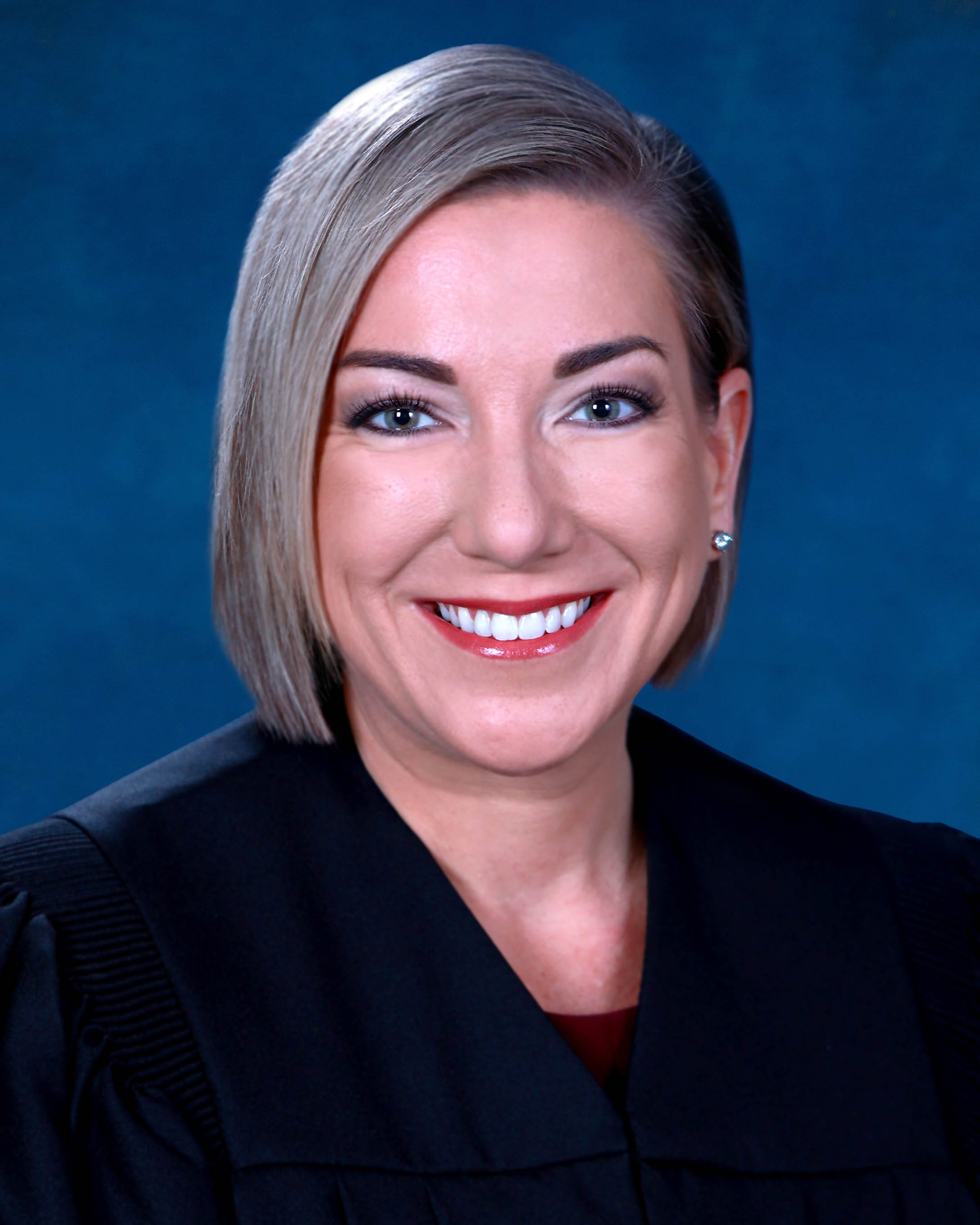
Judge Christine D. Edwards
Individual Rules, Standing Orders & Policies
- Rules last changed:
Limits & Logistics
Document Limits
Courtesy Copies
Case Law
- Hand Delivery
- Prior To Any Proceeding
Courtesy copies
- Email • Immediately Upon Filing
- Within 3 Business Days Before Proceeding
Emergency Motion
Notice Of Settlement, Joint Stipulation, Dismissal
- 1 copy • Email • Upon Filing
Adjournments
- Parties stipulating to new deadlines must file an agreed motion alleging good cause and upload a proposed amended DCM order to the judge’s queue.
- A hearing is required when the proposed amended DCM order extends an individual deadline beyond 90 days.
- An agreed motion and proposed order may substitute for a hearing when the requested extension does not affect a DCM deadline or, if the date changes, does not affect downstream dates without an amended DCM order.
- +5 more
Request must include
Communication
Clerk
Chambers
Phone
Court-wideChambers
Document Format Requirements4 rules
Proposed orders must be submitted in PDF format.
(1) Submit in PDF format;
Case law must be submitted in PDF format.
Format: Case law must be PDF format.
A requested competing order must be emailed to the judicial office, copy all parties, use Word format, and include “Competing Order” in the subject line.
Submit to the judicial office via email, copying all Parties; in Word format; and, “Competing Order” in the subject line.
DOCX
Exhibits must be clearly identified numerically or alphabetically.
Clearly identify numerically or alphabetically.
Document Filing Requirements22 rules
The scheduling party must file a notice of hearing and immediately serve all parties after reserving hearing time.
The scheduling party must file a notice of hearing and serve all parties immediately after reserving hearing time.
Document Type
Notice Of Hearing
The notice of hearing must contain the required ADA notification.
and the ADA notification required by Fla. R. Gen. Prac. & Jud. Admin. 2.540.
Document Type
Notice Of Hearing
A notice of hearing must include judicial Zoom credentials when the appearance will be remote.
The notice must contain the judicial Zoom credentials if appearance(s) will be remote
Document Type
Notice Of Hearing
Evidence submitted for the court’s consideration must be filed in the court file and properly identified.
Any and all evidence, including affidavits/exhibits a party wishes the court to consider must be filed within the court file and properly identified. See Section G. Exhibits for Evidentiary Proceedings.
Document Type
Evidence
An unsolicited proposed order submitted without a hearing must be permitted by a rule or the governing section, must have an accompanying motion, and will otherwise be rejected.
Unsolicited Orders (direct submissions to judge’s queue without hearing): Proposed orders submitted without a hearing must be permitted by Rule or herein and have an accompanying motion. Unsolicited orders will be rejected.
Document Type
Proposed Order
A proposed order must state the hearing date, identify the motion, and include a cover letter certifying that all parties agree to the order’s form and content.
(2) Contain date of hearing; (3) Identify the motion; and, (4) Accompanied by a cover letter certifying that all parties agree to the form and content of the order.
Document Type
Proposed Order
Self-represented parties must file emergency motions and related documents with the Clerk of Court and designate the matter as an emergency.
Self-represented parties shall file all Emergency Motions and documents with the Clerk of Court and designate that the matter is an "Emergency."
Document Type
Emergency Motion And Documents
Exhibits must be attached to the motion or filed at the same time in support of the motion.
Attach to the motion or file contemporaneously (the same time) in support of the motion.
Document Type
Exhibits
An exhibit list is required for a final hearing or trial.
An Exhibit List is required for Final Hearing or Trial.
Document Type
Exhibit List
For Division I papers prepared with AI, the attorney or self-represented party must disclose the AI use and certify that all legal and record citations were verified.
If any attorney for a party, or self- represented party used AI in any way in the preparation of any paper filed with the court, and assigned to Division I, shall in a clear and plain factual statement, disclose that AI was used and certify that each and every citation to the law or the record in the paper, has been verified as accurate.
Document Type
Paper
Each motion must state the precise relief requested, the legal basis for the request, and the rule or statute authorizing the relief.
A motion must include a concise statement of the precise relief requested; a statement of the legal basis for the request; and authority (rule or statute) that allows for the relief requested.
Document Type
Motion
A motion or proposed order generally extending all deadlines by a set number of days will be rejected unless it includes a proposed amended DCM order or CMO.
Motions and/or proposed orders to generally extend all deadlines for a certain number of days without a proposed Amended DCM Order/CMO will be rejected.
Document Type
Motion
A motion to amend a DCM order must be filed before the deadline and include a proposed amended DCM order.
File motion prior to the deadline; in accordance with Fla. R. Civ. P. 1.200(e)(3); and, attach a proposed Amended Differentiated Case Management (DCM) Order.
Document Type
Motion
Failure to attach an amended DCM order or CMO, or to timely set the matter for hearing, may result in denial of the motion.
Failure to append an Amended DCM Order/CMO for the court to consider with the motion and/or failure to timely set for hearing may result in the motion being denied.
Document Type
Motion
An agreed motion seeking stipulated new deadlines must be accompanied by an agreed proposed amended DCM order uploaded to the judge’s queue.
File agreed motion alleging good cause and upload an agreed proposed Amended Differentiated Case Management (DCM) Order to judge’s queue.
Document Type
Motion
A proposed order must be uploaded for clerk default entry of final judgment, and an insufficient motion with the proposed order will be rejected and set for hearing.
Upload a proposed order. See Checklist for Entry of Final Judgment. Proposed orders submitted with insufficient motions will be rejected and set for hearing.
Document Type
Motion
If the case settles before the Pretrial Conference, Trial, or Final Hearing, a party must file a notice of settlement, joint stipulation, or dismissal and email a courtesy copy to the judicial office while copying all parties.
If the case settles prior to the Pretrial Conference, Trial or Final Hearing, one of the parties must file a notice of settlement, joint stipulation or dismissal and provide a courtesy copy to the judicial office via email, copying all parties.
Document Type
Notice Of Settlement
An extension motion must be accompanied by a proposed order containing the quoted language and specifying 30, 60, or 90 days for service.
Upload a proposed order to judge’s queue including the following language: “Court invokes Fla. R. Civ. P. 1.070(j) for the purpose of extending the deadline for service of process. Plaintiff shall serve Defendant within (30, 60 or 90) days of this order; and, failure to effectuate service within the time frame prescribed herein may result in a dismissal of the complaint without prejudice.”
Document Type
Proposed Order
A competing order will be considered only if the court requests it.
Competing Orders: Competing orders will only be considered if requested by the court.
Document Type
Proposed Order
The court will not review evidence presented only on a smartphone or tablet or not filed in the court file.
The court will not review smart phones, tablets, or electronic evidence not in the court file.
Document Type
Exhibits
A motion agreed to by the parties must identify the agreement in its title as agreed, unopposed, or stipulated, as appropriate.
If the Parties agree to the relief sought in a motion, the title must include “agreed,” “unopposed” or “stipulated,” as appropriate.
Document Type
Motion
Parties must provide the court with authority and case law before the hearing.
Parties failed to provide the court authority and case law prior to hearing.
Document Type
Hearing
Filing & Service rules
Electronic Filing Rules
All proposed orders must be submitted through the Florida E-Filing Portal.
Submission Method: All proposed orders must be submitted using the Florida E-Filing Portal.
Page 8 | D. Submission of Orders and Judgments
A previously filed exhibit must be specifically identified and filed separately when offered for a particular purpose.
The court requires that any previously filed exhibit within the court file be specifically identified and filed separately for the purpose in which it is being offered.
Page 11 | G. Exhibits for Evidentiary Proceedings
Exhibits must be filed through the Florida E-Filing Portal or with the Clerk of Court.
Exhibits shall be filed electronically through the Florida E-Filing Portal or with the Clerk of Court to be made part of the court file in accordance with Fla. R. Gen. Prac. & Jud. Admin. 2.525.
Page 11 | G. Exhibits for Evidentiary Proceedings
Motions must be filed electronically through the Florida E-Filing Portal or with the Clerk, and electronic filing does not automatically notify the judge’s office.
(10) Submission Method: Motions shall be filed electronically through the Florida E-Filing Portal or with the Clerk of Court to be made part of the court file. Electronically filing a document transmitted through the Portal does not automatically notify the judge’s office hat the document has been filed.
Page 13 | Requirements Preliminary to Hearing on Motion to Tax Costs and Award Attorney’s Fees
Self-represented parties may submit proposed orders to the Clerk of Court.
Self-represented parties may submit proposed orders to the Clerk of Court.
Page 8 | D. Submission of Orders and Judgments
Electronic evidence should be converted to paper form and filed with the Clerk of Court.
Electronic evidence should be downloaded into paper form and filed with the Clerk of Court.
Page 11 | G. Exhibits for Evidentiary Proceedings
Filing Timing and Cure Windows
A proposed order is due within ten days after an oral pronouncement at a hearing.
Following an ore tenus pronouncement at hearing, proposed orders are due within ten (10) days.
Page 8 | D. Submission of Orders and Judgments
Exhibit binders must be received in the judicial office at least three business days before the evidentiary proceeding.
All exhibit binders must be received in the judicial office three (3) business days prior to the evidentiary proceeding.
Page 11 | G. Exhibits for Evidentiary Proceedings
Exhibit lists received after the deadline established in the pretrial or final-hearing order may not be considered by the court.
Exhibit List(s) not received by the deadline may not be considered by the court.
Page 11 | G. Exhibits for Evidentiary Proceedings
When no rule supplies a response deadline, any required or desired response in opposition must be filed at least 10 days before the hearing.
Responses in Opposition to Motion: To give the court and opposing counsel/party adequate time to prepare, if a response is required or desired, absent a Rule prescribing a time frame, it shall be filed at least ten (10) days prior to hearing.
Page 13 | Responses in Opposition to Motion
A Case Management Conference must be set within 10 days after filing the motion to amend the DCM order.
Set Case Management Conference within ten (10) days of filing the motion.
Page 13 | Motion to Amend Differentiated Case Management (DCM) Order
For cases filed before the 2025 amendment, nonexempt cases must maintain an active DCM order or CMO, and deadlines become strictly enforceable once amended.
Cases filed before the 2025 amendment: All cases not exempt must have an active DCM Order/CMO. Cases with inactive DCM Order/CMO are subject to being set for trial. Absent a ratified Amended DCM Order/CMO, the court may sua sponte issue an Order Setting Pretrial and Trial. Once amended, deadlines are strictly enforced.
Page 14 | Amending DCM Order/CMO — Strict compliance
For cases filed after the 2025 amendment, DCM deadlines are strictly enforced, unavailability notices do not alter them, and extension requests must be submitted before expiration.
Cases filed after the 2025 amendment: Deadlines in a DCM Order/CMO are strictly enforced. Notices of unavailability do not change the deadlines in the DCM Order/CMO. Requests (either by motion or stipulation) to extend a deadline must be made prior to their expiration. Failure to make an extension request prior to the deadline may result in the denial of the request.
Page 14 | Amending DCM Order/CMO — Strict compliance
A stipulated notice or motion to set trial must be filed before the applicable DCM Order/CMO deadline: 260 days after the complaint in Streamlined cases and 360 days after the complaint in General cases.
(1) File stipulated notice or motion prior to the deadline in the DCM Order/CMO (260 days after filing of complaint for Streamlined cases and 360 days after filing of complaint for General cases)
Page 16 | I. Setting Case for Trial
When the court reserves ruling, it intends to publish the ruling within 30 days after the hearing and no later than 60 days after the hearing.
If the court reserved ruling, the court intends to publish ruling within thirty (30) days, but no later than sixty (60) days of hearing.
Page 8 | D. Submission of Orders and Judgments
Service and Proof of Service Rules
All parties must be served immediately after hearing time is reserved.
The scheduling party must file a notice of hearing and serve all parties immediately after reserving hearing time.
Page 3 | B. Scheduling Procedures
If a case remains pending for more than 120 days without a motion, the court will give administrative notice to serve the defendant within 60 days, failing which the claim may be dismissed without prejudice.
Absent a Motion, cases pending for more than 120 days will be noticed administratively to serve within 60 days or the claim will be dismissed without prejudice for failing to timely serve defendant.
Page 19 | K. Small Claims Procedure
Courtesy Copy Requirements
A party filing a compliant continuance motion must email a courtesy copy to the judicial office and copy all parties for immediate consideration.
Provide a courtesy copy to the judicial office via email, copying all parties, for the court’s immediate consideration.
Page 4 | B. Scheduling Procedures
When a submission contains more than five cases, the case law must be provided to the judicial office in paper form.
Any matters with more cases must be provided in paper form to the judicial office.
Page 9 | E. Courtesy Copies of Case Law and Other Documents
Highlighted copies of relied-upon case law must be submitted before any proceeding.
When Required: Highlighted copies of case law in which a party relies on must be submitted to the court prior to any proceeding.
Page 9 | E. Courtesy Copies of Case Law and Other Documents
Courtesy copies must reach the judicial office at least three business days before the proceeding.
Deadline for Submissions: Courtesy copies must be submitted or delivered to the judicial office no later than three (3) business days before any proceeding.
Page 9 | E. Courtesy Copies of Case Law and Other Documents
For emergency motions, attorneys must email a courtesy copy to the judicial office while copying all parties.
Attorneys shall file the motion, provide a courtesy copy to the judicial office via email, copying all parties, for the court’s immediate consideration.
Page 10 | F. Emergency and Other Urgent Matters
When the case settles before the Pretrial Conference, Trial, or Final Hearing, a party must provide the filed settlement document to the judicial office by email and copy all parties.
If the case settles prior to the Pretrial Conference, Trial or Final Hearing, one of the parties must file a notice of settlement, joint stipulation or dismissal and provide a courtesy copy to the judicial office via email, copying all parties.
Page 17 | I. Setting Case for Trial
After filing a motion to continue trial, the moving party must email a courtesy copy to the judicial office and copy all parties for immediate court consideration.
Once filed, the moving party must provide a courtesy copy to the judicial office via email, copying all parties for the court’s immediate consideration.
Page 17 | I. Setting Case for Trial
When the submission contains five or fewer cases, email to the judicial office while copying all parties is permitted.
Submission Method: If the case law is five (5) or less cases the submission may be made to the judicial office via email, copying all parties.
Page 9 | E. Courtesy Copies of Case Law and Other Documents
If the DCM Order/CMO is inactive or the case is exempt from it, a courtesy copy of the filed stipulated notice or motion must be emailed to the judicial office with all parties copied.
If the DCM Order/CMO is inactive (deadlines expired) or cases exempt from DCM Order/CMO, provide a courtesy copy of the filed stipulated notice or motion to the judicial office via email, copying all Parties.
Page 16 | I. Setting Case for Trial
A courtesy copy of the filed stipulated notice or motion must be emailed to the judicial office with all parties copied.
Provide a courtesy copy to the judicial office via email, copying all Parties.
Page 16 | I. Setting Case for Trial
Pre-Motion Conference Requirements
Represented parties must complete the required Rule 1.202 conferral before filing a motion unless exempt.
Represented parties must comply with Fla. R. Civ. P. 1.202 prior to filing a motion unless exempt.
Page 12 | H. Pretrial Procedures
Adjournment & Extension Requirements
A hearing is required when the proposed amended DCM order extends an individual deadline beyond 90 days.
Hearing required if the proposed Amended DCM Order extends a particular deadline beyond ninety (90) days.
Page 13 | Amending DCM Order/CMO — Parties stipulate to new deadlines
Parties stipulating to new deadlines must file an agreed motion alleging good cause and upload a proposed amended DCM order to the judge’s queue.
File agreed motion alleging good cause and upload an agreed proposed Amended Differentiated Case Management (DCM) Order to judge’s queue.
Page 13 | Amending DCM Order/CMO — Parties stipulate to new deadlines
Cases older than three years require a Case Management Conference to extend or establish deadlines.
Cases over three (3) years old require a Case Management Conference to extend/establish deadlines.
Page 14 | Amending DCM Order/CMO
An extension or enlargement of time to effectuate service must be requested by a motion filed before the deadline and alleging good cause.
File motion prior to deadline alleging good cause. Failure to make an extension request prior to the deadline may result in the denial of the request.
Page 19 | K. Small Claims Procedure
An agreed motion and proposed order may substitute for a hearing when the requested extension does not affect a DCM deadline or, if the date changes, does not affect downstream dates without an amended DCM order.
Parties may submit an agreed motion and proposed order in lieu of a hearing to extend or enlarge time pursuant to Fla. R. Civ. P. 1.090 if that extension does not affect a deadline in the DCM Order/CMO or changing the date does not affect downstream dates without an Amended DCM Order.
Page 13 | Amending DCM Order/CMO — Parties stipulate to new deadlines
A motion to continue trial after entry of an Order Setting Pretrial Conference and Trial must comply with Florida Rule of Civil Procedure 1.460.
If the court has entered an Order Setting Pretrial Conference and Trial, motions to continue must comply with Fla. R. Civ. P. 1.460.
Page 17 | I. Setting Case for Trial
Small claims continuances are granted only on a limited basis through a timely motion or as permitted by the cited rule.
Continuances only granted on limited basis by timely motion or as permitted by Fla. Sm. Cl. R. 7.090(e).
Page 20 | K. Small Claims Procedure
The court may deny a continuance or supplementation of the record and rule on the merits unless a rule permits that relief.
The court may not allow a continuance or supplementation of the record absent a Rule that permits such relief, and proceed to ruling based on the merits, even if:
Page 24 | M. YOUR COURT DAY
Chambers Communication Rules
The judicial office rejects ex parte communications concerning a pending or impending proceeding unless authorized by law.
All communication must comply with Canon 3 of the Code of Judicial Conduct, which prohibits a judge from initiating, permitting, or considering communications outside the presence of the parties concerning a pending or impending proceeding, unless authorized by law. Ex parte communications received by this office will be rejected.
Page 2 | A. Communications with Judicial Office
Attorneys and self-represented parties must provide an email address for electronic delivery of signed orders unless excused.
All attorneys and self-represented parties must provide an e-mail address to receive signed orders electronically, unless excused.
Page 2 | A. Communications with Judicial Office
For a hearing more than 24 hours away, the scheduling party may cancel it by filing a notice of cancellation, removing the hearing from JAWS, and emailing a courtesy copy to the judicial office while copying all parties.
Hearings scheduled to take place more than 24 hours may be cancelled by the scheduling party by filing a notice of cancellation; removing the hearing from JAWS; and, providing a courtesy copy to the judicial office via email, copying all parties.
Page 4 | B. Scheduling Procedures
When a case has a DCM Order or CMO with active deadlines, the scheduling party may cancel a hearing within 24 hours using the same cancellation and email procedure.
Case(s) with DCM Order/CMO with active deadlines- the scheduling party may cancel a hearing same as above.
Page 4 | B. Scheduling Procedures
A self-represented party must update its information to receive orders electronically or access the court file after filing a motion or request that may require a prompt response.
It is the responsibility of a self-represented party to either update their information to receive orders electronically or access the court file upon filing a motion/request that may have a short time frame to comply if granted (i.e. extensions of time; summary procedure-evictions).
Page 2 | A. Communications with Judicial Office
The judicial office rejects unsolicited communications and permits contact only in accordance with its practices and procedures.
Parties may only contact the judicial office in accordance with these practices and procedures. Unsolicited communications received by the office will be rejected.
Page 2 | A. Communications with Judicial Office
The judicial office rejects communications that request legal advice, discuss substantive case details, or seek information outside the judicial assistant’s administrative role.
The judicial assistant may not provide legal advice or discuss specific case details. Self-represented parties are held to the same standard as a party represented by counsel and must follow the same rules of law, procedure, and evidence that lawyers are required to follow. Inappropriate communication with the court that discuss specific, substantive case information or details, request legal advice, or inquire of information outside the purview of the judicial assistant’s administrative role will be rejected.
Page 2 | A. Communications with Judicial Office
Attorneys and self-represented parties must use Form 2.603 to update their contact information whenever the email account registered for electronic service changes.
It is the responsibility of attorneys and self- represented parties to update their contact information using Form 2.603 any time there is a change in the e-mail account registered for electronic service.
Page 2 | A. Communications with Judicial Office
Email is the preferred method for contacting the judicial office, and communications should copy opposing counsel or the party and include the case number, case style, and request or subject.
Method of Communication: Email is preferred at civdivi@fljud13.org. When contacting the judicial office, copy opposing counsel/party, provide the case number, case style and request/subject in subject line.
Page 2 | A. Communications with Judicial Office
Parties should not inquire about the entry of a proposed order before 30 days have passed from the hearing.
Please do not inquire about the entry of a proposed order prior to thirty (30) days of hearing.
Page 8 | D. Submission of Orders and Judgments
Counsel may schedule a Case Management Conference directly through JAWS in a Daily 15- or Daily 30-minute slot, or by contacting the judicial office.
Set through JAWS directly (if counsel) in either a Daily 15 or Daily 30-minute time slot or contact the judicial office.
Page 14 | Case Management Conferences (CMC)
Questions or concerns about the claim-of-exemptions process must be directed to ClaimofExemption@hillsclerk.com.
• Claim of exemptions: Any questions or concerns on the process shall be directed to ClaimofExemption@hillsclerk.com.
Page 23 | L. Post Judgment Procedure