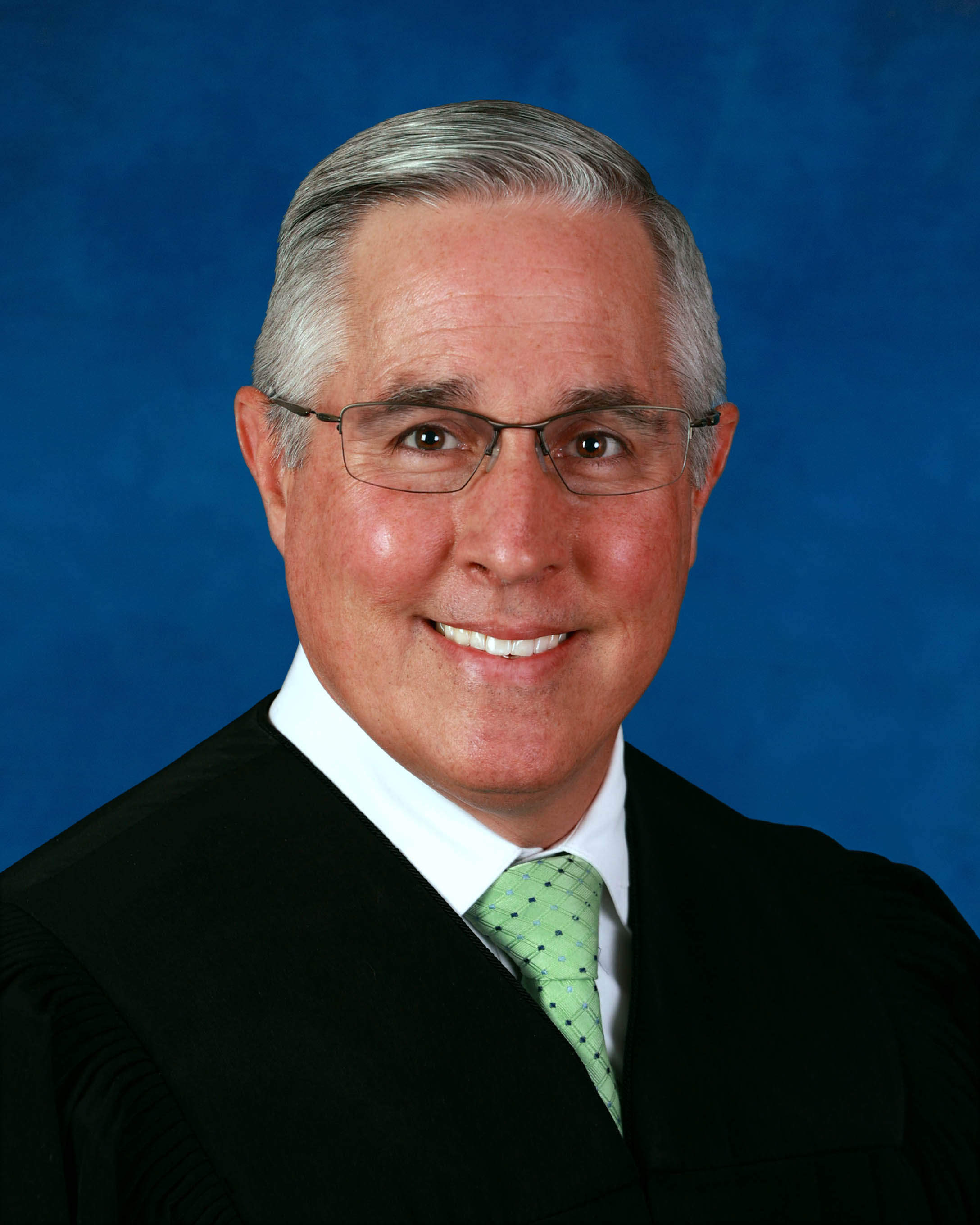
Judge Richard H. Martin
Individual Rules, Standing Orders & Policies
- Rules last changed:
Limits & Logistics
Document Limits
Courtesy Copies
Chambers Copy
Court-wideCourtesy copies
Court-wideExtraordinary Writ Petition
Court-wide- Immediately Upon Filing
Financial Affidavit, Exhibits
Court-wideCommunication
Chambers
Phone
Chambers
Clerk
Clerk
Clerk
Document Format Requirements1 rule
Every proposed order must use the PDF/A file format.
All proposed orders must be submitted in PDF/a format through the E-Portal.
PDF A
Document Filing Requirements4 rules
To cancel a hearing, a notice of cancelation must be filed and chambers must be alerted by phone or email as soon as possible.
If you would like to cancel a hearing, please file a notice of cancelation and alert chambers by phone or email as soon as possible.
Document Type
Notice Of Cancelation
A party seeking submission of a stipulation-based proposed order must first file the signed stipulation.
If you intend to submit a proposed order based on a stipulation between the parties, please ensure that a stipulation signed by the relevant parties is filed on the case before submitting a proposed order.
Document Type
Proposed Order
A defendant must first file a motion requesting an adversary preliminary hearing under Rule 3.133(b).
To schedule an adversary preliminary hearing under Rule 3.133(b), the defendant must first file a motion for an adversary preliminary hearing.
Document Type
Motion For Adversary Preliminary Hearing
A proposed-order submission must include a cover letter stating the hearing date, if any, the relevant motion or stipulation title, and whether the opposing party agrees with the order form or requested relief.
Please also submit a cover letter informing the Court (1) the date of the hearing, if any, (2) the title of the relevant motion or stipulation, and (3) whether the opposing party agrees to the form of the order or the relief sought.
Document Type
Cover Letter
Filing & Service rules
Electronic Filing Rules
Every proposed order must be submitted electronically through the E-Portal in PDF/A format.
All proposed orders must be submitted in PDF/a format through the E-Portal.
Page 9 | F. Submission of Orders and Judgments
Filing Timing and Cure Windows
For a motion involving multiple cases, a motion and notice must be filed in each case.
If your motion involves multiple cases, a motion and notice must be filed in each case.
Page 4 | C. Scheduling Procedures
A case will be heard only if it has a filed motion and notice of hearing.
Only cases with a filed motion and notice will be heard.
Page 4 | C. Scheduling Procedures
A motion and notice of hearing must be filed by 11:59 a.m. on the day before the hearing for the motion to be placed on the docket.
The motion and notice of hearing must be filed by 11:59 a.m. on the day before the hearing for the motion to be set on the docket.
Page 4 | C. Scheduling Procedures
Except in emergencies, a motion or notice filed after noon on the day before the hearing will be stricken.
Except in emergent circumstances, motions or notices filed after noon on the day before the hearing will be stricken.
Page 4 | C. Scheduling Procedures
Service and Proof of Service Rules
Attorneys and self-represented litigants must update their electronic-service contact information using Form 2.603 whenever their registered email account changes.
It is the responsibility of attorneys and self-represented litigants to update their contact information using Form 2.603 any time there is a change in the email account registered for electronic service.
Page 3 | B. Communications with the Judicial Office
Every notice of hearing must be filed, served on all parties, and include the required ADA notification.
Notice of Hearing: All notices of hearing must be filed, served on all parties, and contain the ADA notification required by Florida Rule of General Practice and Judicial Administration 2.540.
Page 5 | C. Scheduling Procedures
Pre-Motion Conference Requirements
Defense counsel must contact the assigned assistant state attorney before a bond-reduction hearing to attempt to reach a stipulation.
Good-Faith Conference Required: Under paragraph 12(A) of Administrative Order S-2024-062, defense counsel must contact the assistant state attorney assigned to the case or to Division O before a hearing to reduce bond. Counsel must then discuss whether a stipulation to reduce bond can be reached. If not, defense counsel may schedule a hearing.
Page 5 | C. Scheduling Procedures
Counsel must confer in good faith with the State Attorney before filing a motion for return of property, and a hearing set before that conference and chambers review will be canceled.
You must confer with the State Attorney before filing a motion for return of property, because such motions are often unopposed. Hearings set before a good-faith conference and before allowing the Court to review the motion in chambers will be canceled.
Page 9 | E. Hearing-Specific Procedures
Adjournment & Extension Requirements
Continuances for pretrial detention hearings and first appearances are governed by specified Florida rules, with no special continuance procedure.
Continuance Procedure: Continuances for pretrial detention hearings and first appearances are governed by Rules 3.132(e), 3.130(a), and 3.133(a)(1). Judge Martin adheres to the rules and does not have any special procedures for continuances of hearings.
Page 5 | C. Scheduling Procedures
Chambers Communication Rules
Every email to the judicial office must copy all parties unless law authorizes an ex parte communication.
All parties must be copied on any email directed to the judicial office, unless an ex parte communication is authorized by law.
Page 2 | B. Communications with the Judicial Office
Litigation may not be submitted by email to chambers, and relief must instead be sought through a motion or stipulation.
Litigation by emailing chambers is absolutely prohibited. All relief must be sought by motion or stipulation.
Page 2 | B. Communications with the Judicial Office
Counsel must clear the hearing date and time with the judicial office before filing the notice of hearing.
Under paragraph 17(B) of Adminstrative Order S-2024-062, counsel must clear the hearing date and time with the judicial office before filing your notice of hearing.
Page 4 | C. Scheduling Procedures
Before a return-of-property hearing is scheduled, a copy of the motion must be emailed to the judicial office, State Attorney, and law-enforcement agency holding the property.
Before scheduling a hearing on a motion for return of property, you must email a copy of the motion to the judicial office, the State Attorney, and the law enforcement agency holding the property.
Page 9 | E. Hearing-Specific Procedures
Substantive communications sent to the judicial office will be forwarded to all relevant parties and entered on the public docket.
Any communication with the judicial office concerning substantive matters will be immediately forwarded to all relevant parties and filed on the public docket.
Page 2 | B. Communications with the Judicial Office
Communications to the judicial office must include the sender's name, case number, case name, phone number, and email address.
With any communication, please include your name, the case number (e.g., 25-CF-000001), the case name (e.g., State of Florida v. John Doe), your phone number, and your email address, so that we can respond as quickly as possible.
Page 2 | B. Communications with the Judicial Office
Chambers must be emailed to schedule a hearing.
Please email chambers (ppcourt@fljud13.org) to schedule a hearing.
Page 4 | C. Scheduling Procedures
If a party cannot appear in person, the party must contact chambers by phone or email.
If you cannot appear in person, please contact chambers by phone or email.
Page 6 | D. Remote Appearance
Counsel may not appear by Zoom or telephone at evidentiary pretrial detention hearings except in extraordinary and exigent situations.
Because pretrial detention hearings are evidentiary, we do not allow counsel to appear by Zoom or telephone except in extraordinary and exigent situations.
Page 6 | E. Hearing-Specific Procedures
Parties should notify the judicial office or bailiff when a first-appearance scheduling conflict or limited availability prevents full attendance.
If you have a scheduling conflict or only a limited amount of time you can be present in court, please contact the judicial office or notify the bailiff upon arriving.
Page 7 | C. Scheduling Procedures
Counsel seeking a defendant's physical presence at a first appearance must alert the judicial office or bailiff.
If your client was arrested for violating probation or failing to appear and you would like them physically present at first appearances, please alert the judicial office or the bailiff, and we will make sure they are present.
Page 8 | C. Scheduling Procedures
The judicial office must be alerted by email after the motion is filed, after which the Court decides whether to set an adversary preliminary hearing.
After alerting the judicial office to the motion by email, the Court will evaluate the motion without a hearing and determine whether an adversary preliminary hearing should be set.
Page 9 | E. Hearing-Specific Procedures
Contact the judicial office as soon as possible when an interpreter is needed for a hearing or trial.
If an interpreter is needed for a hearing or trial, please contact the judicial office as soon as possible.
Page 11 | A. Overview
The judicial office may be contacted by email.
You may contact the judicial office by email or telephone.
Page 2 | B. Communications with the Judicial Office
The email prohibition on litigation does not apply to administrative matters such as scheduling.
(This restriction does not apply to administrative matters, like scheduling.)
Page 2 | B. Communications with the Judicial Office
Parties may contact the judicial office for guidance on whether a matter belongs in Division O or the assigned criminal trial division.
If you are unsure whether a matter should be set in Division O or the assigned criminal trial division, please contact us.
Page 2 | A. Overview
The judicial office may be contacted to determine whether a defendant appears on the first-appearance docket.
You are welcome to contact the judicial office to determine whether a particular defendant is on the first appearance docket.
Page 8 | C. Scheduling Procedures