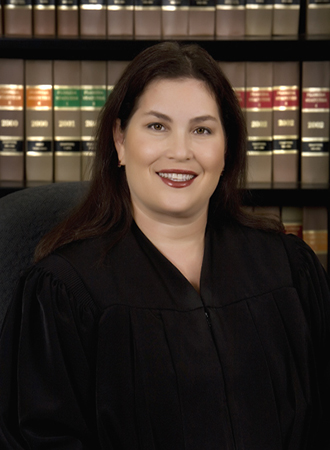
Judge Alane Laboda
Individual Rules, Standing Orders & Policies
- Rules last changed:
Limits & Logistics
Courtesy Copies
Courtesy copies
- No Later Than 7 Days Before Hearing Or Trial
Discovery Motion
Exhibits
Filings < 20 pages
Adjournments
- A hearing covered by the standing order may not be cancelled without express permission from the court.
- Continuance motions are disfavored and require a showing of good cause; successive continuances and lack of due diligence weigh against or defeat the request, and the requesting party generally must sign the motion absent good cause.
- A continuance motion must specifically state the basis for the request, opposition, enabling actions and dates, and the proposed date the case will be ready to proceed, including whether all parties agree to that date.
- +1 more
Request must include
Communication
Clerk3 contacts
- (239) 533-1727
- 941-637-2257
- 941-637-2214
Chambers2 contacts
- labodapleadings@ca.cjis20.org
- (239) 533-2744
Other Contacts2 contacts
- unassignedcivil@ca.cjis20.org
- ggentilecivil@ca.cjis20.org
Document Format Requirements6 rules
Proposed orders must be submitted in Word format and provided to opposing counsel and any self-represented litigant.
All proposed orders must be submitted in Word format and provided to opposing counsel and any self-represented litigant.
DOCX
Exhibits must use the prescribed party-specific label format.
Exhibits must be labeled in the following format:
Exhibits must be pre-marked with party-specific exhibit numbers.
Pre-mark all exhibits using numbers for each party description, i.e. Plaintiff/Petitioner Exhibit #1, Defendant/Respondent Exhibit #2, etc.
For an in-person hearing, exhibits should be marked, exchanged, brought to the hearing, and accompanied by a table of contents.
For in-person hearing, Exhibits should be marked, exchanged and brought to the hearing to be handed to the Clerk of Court at the time of the hearing. A Table of Contents should be attached.
Each Avery 5366 exhibit label should include the case style, case number, and exhibit number in the lower-right corner.
Each exhibit label (AVERY 5366) should contain the case style, case number and exhibit number as shown in the lower right side:
An exhibit label should not be placed on the reverse side of a document.
Exhibit label should NOT be placed on the reverse side of documents.
Document Filing Requirements14 rules
All motions must comply with the applicable rules and include a Certificate of Conferral; noncompliant motions may not be heard.
Local Rules and Standards of Professionalism regarding motions are strictly enforced. All motions shall comply with Fla. R. Civ. P. 1.202 and must include a Certificate of Conferral. Any motions not in full compliance with these rules may not be heard.
Document Type
Motion
Motions for rehearing or a new trial must be submitted in writing.
Motions for Rehearing and/or Motion for New Trial MUST be submitted in writing.
Document Type
Motion For Rehearing Or New Trial
A party appearing by telephone must file a Notice of Telephonic Appearance stating the hearing’s date and time.
If you are attending a hearing telephonically, the party appearing shall file a Notice of Telephonic Appearance with the date and time of the hearing and shall serve a copy on all parties entitled to notice of the proceeding.
Document Type
Notice Of Telephonic Appearance
A Zoom video appearance requires a timely stipulation and order signed by all parties, filed with and approved by the court.
In order to appear via ZOOM VIDEO, a Stipulation and order (https://www.ca.cjis20.org/pdf/judge/OrderDirectingZoomHearin g.docx) must be filed with and approved by the Court in sufficient time for the approved order to be returned to the requesting party.
Document Type
Zoom Hearing Stipulation And Order
If a party objects to a proposed submission, both parties must submit their proposed orders or documents, outline the objections, and copy all parties with enclosures.
If there is an objection both parties must submit their proposed Orders or documents to the Court, outlining the objections and copying all parties with enclosures.
Document Type
Proposed Order
A cover letter for a proposed order or similar document must state that all counsel reviewed the submission and identify whether they object.
If submitting a proposed Order or other such document, the cover letter must indicate that all counsel have reviewed the proposed submission and indicate whether or not they have an objection to the same.
Document Type
Proposed Order
A request for an emergency hearing must be made by a detailed motion identifying the issues, the reasons for urgency, and the time needed for each party’s presentation.
If a party believes there is a factual basis for setting an emergency hearing, a detailed motion setting forth the following must be filed: (1) the issues to be resolved, (2) reasons why an emergency hearing is necessary, and (3) the amount of time needed for each party’s presentation.
Document Type
Emergency Motion
Counsel must provide a certificate of good faith with every discovery motion in civil actions before the Lee County Circuit Court.
the Court will require counsel, in all civil actions in the Circuit Court of the Twentieth Judicial Circuit in and for Lee County, Florida, to provide a certificate of good faith with all discovery motions.
Document Type
Discovery Motion
Before hearings on discovery motions are scheduled, the moving party must confer with opposing counsel and contemporaneously file a statement certifying a good-faith conference and that the issues remain unresolved.
prior to scheduling any hearings on discovery motions, including, but not limited to, motions to compel, motions for protective orders, motions for sanctions, motions for extensions of time, etc., counsel for the moving party shall confer with counsel for the opposing party and thereafter file with the Clerk of the Court contemporaneously with the discovery motion, a statement certifying that counsel has personally conferred with opposing counsel in a good faith effort to resolve by agreement ===== PAGE 2 ===== the issues raised and that counsel have been unable to do so.
Document Type
Discovery Motion
The certificate must describe counsel's conferral efforts and conference details, and identify resolved and unresolved issues.
The certificate of good faith shall specify the details of counsel's efforts to confer with opposing counsel and the details of that conference. If certain of the issues have been resolved by agreement, the certificate shall specify the issues so resolved and the issues that remain unresolved.
Document Type
Certificate
A notice of hearing for a remote appearance must include the judge’s telephonic credentials.
A notice of hearing involving any remote appearance must list the Judge’s telephonic credentials.
Document Type
Notice Of Hearing
Every notice of hearing must include the ADA notification required by Florida Rule of General Practice and Judicial Administration 2.540.
All notices of hearing must contain the Americans with Disabilities Act (ADA) notification required by Florida Rule of General Practice and Judicial Administration 2.540.
Document Type
Notice Of Hearing
The court will not hold orders pending party objections, and nonconforming orders will be returned.
The Court will not hold Orders pending objection by the parties. All Orders not in conformity with the above will be returned.
Document Type
Proposed Order
Division forms are mandatory for all relevant filings.
Division forms must be used for all relevant filings.
Document Type
Relevant Filings
Filing & Service rules
Electronic Filing Rules
Proposed orders must be submitted through the proposed order portion of the Florida Courts E-Filing Portal.
All proposed orders must be submitted to the court by the proposed order portion of the Florida Courts E-Filing Portal.
Page 10 | D. Submission of Orders and Judgments
Emergency motions must be sent to the judge by urgent-flagged email and the E-Portal, accompanied by a verified motion signed by counsel and their clients, followed by a telephone call.
All emergency hearings/motions must be submitted to the Judge in writing via Electronic Mail (flagged urgent) and through the E- Portal with a copy of the verified Motion signed not only by counsel but ALSO THEIR CLIENT(S) followed by a telephone call, (239) 533-2744.
Page 11 | F. Emergency and Other Urgent Matters
Self-represented litigants excused from email service may submit proposed orders by U.S. mail or hand delivery to the judicial office.
Self-represented litigants excused from e-mail service may submit proposed orders to the court by U.S. mail or hand-delivered to the judicial office.
Page 10 | D. Submission of Orders and Judgments
Filing Timing and Cure Windows
If the issues requiring a hearing are resolved, the requesting party must notify the court and submit an agreed order at least 24 hours before the hearing.
Should the issues giving rise to said hearing resolve, the party having requested hearing time is required to notify the Court and submit an agreed order as to the resolution at least 24 hours prior to the hearing date.
Page 4 | B. Scheduling Procedures — Scheduling Hearings
All materials for a hearing must be received by the court no later than seven business days before the hearing.
☐ The court must receive all materials for the hearing no later than seven (7) business days before the hearing.
Page 5 | Submission Deadlines
If hearing issues resolve, the party that requested hearing time must notify the court and submit an agreed order at least 24 hours before the hearing.
Should the issues giving rise to a scheduled hearing resolve, the party having requested hearing time is required to notify the Court and submit an agreed order as to the resolution at least 24 hours prior to the hearing date.
Page 10 | D. Submission of Orders and Judgments
Proposed orders must be submitted as directed by the court at the time of the hearing.
Proposed orders must be submitted as directed by the Court at the time of hearing.
Page 10 | D. Submission of Orders and Judgments
An emergency motion must be filed with the clerk before it is submitted to the judge.
The motion must be filed with the clerk prior to submission.
Page 11 | F. Emergency and Other Urgent Matters
For remote hearings, exhibits should be marked, exchanged, and filed at least 72 business hours before the hearing, with a table of contents and an emailed courtesy copy to chambers.
For remote hearings, Exhibits should be marked, exchanged and filed with the Clerk of Court in advance of the hearing. In Order to allow the Clerk of Court to properly process the Exhibits, all Exhibits shall be filed at least seventy-two (72) business hours prior to the hearing. A Table of Contents should be attached and a courtesy copy submitted to the Court in Chambers (via email).
Page 12 | G. Exhibits for Evidentiary Proceedings
Attorneys and pro se litigants must exchange exhibits with the opposing party no later than 10 business days before the hearing or trial.
All attorneys and pro se litigants are required to exchange exhibits with the opposing party no later than 10 business days prior to the hearing/trial.
Page 13 | G. Exhibits for Evidentiary Proceedings
All other exhibits must be submitted 72 hours before the evidentiary proceeding.
All other exhibits must be submitted seventy-two (72) hours before the evidentiary proceeding.
Page 13 | G. Exhibits for Evidentiary Proceedings
Service and Proof of Service Rules
Attorneys and self-represented litigants must generally make and receive service by e-mail through the Florida Courts E-Filing Portal unless excused.
All attorneys and self-represented litigants must make and receive service by e-mail, which is generally through the Florida Courts E-Filing Portal, unless excused.
Page 2 | A. Communications with the Judicial Office
A notice of hearing must be filed and served immediately after hearing time is reserved.
A notice of hearing must be filed and served immediately after reserving hearing time.
Page 4 | B. Scheduling Procedures — Notice of Hearing
A party appearing by telephone must serve the Notice of Telephonic Appearance on every party entitled to notice of the proceeding.
If you are attending a hearing telephonically, the party appearing shall file a Notice of Telephonic Appearance with the date and time of the hearing and shall serve a copy on all parties entitled to notice of the proceeding.
Page 8 | C. Remote Appearance
Courtesy Copy Requirements
Courtesy copies must be submitted at least seven days before a hearing or trial.
Courtesy copies must be submitted to the court no later than seven (7) days before any hearing or trial.
Page 11 | E. Courtesy Copies of Case Law and Other Documents
Courtesy copies of material under 20 pages must be emailed to the court.
Any material under 20 pages must be submitted to the court by e-mail to LabodaPleadings@ca.cjis20.org.
Page 11 | E. Courtesy Copies of Case Law and Other Documents
Material over 20 pages must be submitted to the court by U.S. mail or hand-delivered to the judicial office.
Any material over 20 pages must be submitted to the court by U.S. mail or hand-delivered to the judicial office.
Page 11 | E. Courtesy Copies of Case Law and Other Documents
The Judicial Assistant will not schedule a discovery-motion hearing until receiving a courtesy copy of the motion and its certificate of good faith.
The Court's Judicial Assistant will not schedule any hearings on discovery motions without first receiving a courtesy copy of the motion and the accompanying certificate of good faith.
Page 2 | IN RE: DISCOVERY MOTIONS IN CIVIL ACTIONS
One courtesy copy of a motion for rehearing or new trial must be sent to the judge’s chambers by email or through the E-Portal.
Please send a courtesy copy of the motion to the Judge’s Chambers (via Electronic Mail or the E-Portal).
Page 7 | B. Scheduling Procedures
Material already filed with the clerk should not be submitted as a courtesy copy.
Do not submit any material that has already been filed with the Clerk.
Page 11 | E. Courtesy Copies of Case Law and Other Documents
Remote-hearing exhibits should include a table of contents and an emailed courtesy copy to chambers.
A Table of Contents should be attached and a courtesy copy submitted to the Court in Chambers (via email).
Page 12 | G. Exhibits for Evidentiary Proceedings
Self-represented litigants excused from email service may submit courtesy copies by mail or hand-delivery.
Self-represented litigants excused from e-mail service may submit courtesy copies to the court by U.S. mail or hand-delivery to the judicial office.
Page 11 | E. Courtesy Copies of Case Law and Other Documents
Pre-Motion Conference Requirements
The discovery conference must be a substantive in-person or telephone conversation conducted in good faith to resolve the dispute without court action; merely attempting to confer or exchanging self-serving emails or faxes is insufficient.
The conference by and between counsel shall be conducted in person or by telephone. Counsel that merely "attempt" to confer have not "conferred." The word "confer" requires a substantive conversation in person or by telephone in a good faith effort to resolve the matter without court action and does not envision an exchange of self-serving letters or ultimatums submitted via e-mail or facsimile.
Page 2 | IN RE: DISCOVERY MOTIONS IN CIVIL ACTIONS
Adjournment & Extension Requirements
A hearing covered by the standing order may not be cancelled without express permission from the court.
Said hearings shall not be cancelled unless expressly permitted by the Court.
Page 4 | B. Scheduling Procedures — Scheduling Hearings
A continuance motion must specifically state the basis for the request, opposition, enabling actions and dates, and the proposed date the case will be ready to proceed, including whether all parties agree to that date.
Motions for continuance must state with specificity: (1) the basis of the need for the continuance, including when the basis became known to the movant; (2) whether the motion is opposed; (3) the action and specific dates for the action that will enable the movant to be ready, including, but not limited to, confirming the specific date any required participants are available; and (4) the proposed ===== PAGE 6 ===== date by which the case will be ready to proceed and whether that date is agreed by all parties.
Page 5 | Continuance Procedure
Submitting a stipulation does not automatically continue a trial; the stipulation must be signed by all counsel and parties, explain the reasons for the requested continuance, and trial preparation must continue until an order granting the continuance is entered.
Trials are not automatically continued by the submission of a stipulation. A stipulation must be signed by all counsel and all parties and shall be submitted to the Court detailing the reasons a continuance is necessary. The Judge will determine if a hearing is required. All parties shall continue to prepare for trial as scheduled until an Order is entered granting a continuance.
Page 6 | Continuance Procedure: Stipulations
Continuance motions are disfavored and require a showing of good cause; successive continuances and lack of due diligence weigh against or defeat the request, and the requesting party generally must sign the motion absent good cause.
☐ Motions for continuance are disfavored and will be granted only upon good cause shown. Successive continuances are highly disfavored. Lack of due diligence is not grounds for granting a continuance. Except for good cause shown, the motion must be signed by the party requesting the continuance, as required by Florida Rule of General Practice and Judicial Administration 2.545(e) and Rules of Civil Procedure.
Page 5 | Continuance Procedure
Chambers Communication Rules
All communications to the judicial office must be sent by e-mail to the dedicated division account, with the case number, case name, and relevant matter in the subject line.
All communications to the judicial office must be submitted by e-mail to LabodaPleadings@ca.cjis20.org, the dedicated division e-mail account. The subject line of any e-mail to the judicial office must contain the case number, case name, and relevant matter (e.g., 24 CA 001234 – Doe v. Doe – 2-Hour Hearing Requested).
Page 1 | A. Communications with the Judicial Office
All parties must be copied on e-mails directed to the judicial office unless the communication is legally authorized to be ex parte.
All parties must be copied on any e-mail directed to the judicial office, unless an ex parte communication is authorized by law.
Page 2 | A. Communications with the Judicial Office
When the court finds an emergency, it will unilaterally schedule the hearing and all parties must be available unless exigent circumstances apply.
If the court determines that an emergency exists, a hearing will be scheduled unilaterally by the court. All parties shall make themselves available for the emergency hearing, barring exigent ===== PAGE 12 ===== circumstances.
Page 11 | F. Emergency and Other Urgent Matters
An emergency motion submission must be followed by a telephone call to the judge’s chambers at the stated number.
followed by a telephone call, (239) 533-2744.
Page 11 | F. Emergency and Other Urgent Matters
Emergency hearings and motions must not be scheduled through the Judicial Automated Calendaring System.
Emergency hearings/motions shall not be scheduled through the Judicial Automated Calendaring System.
Page 12 | F. Emergency and Other Urgent Matters
Self-represented litigants and attorneys excused from e-mail service may contact the judicial office by telephone at (239) 533-2744, but the judicial office does not accept text messages.
Self-represented litigants and attorneys excused from e-mail service may communicate with the judicial office by telephone call to (239) 533-2744. The judicial office does not accept text messages.
Page 2 | A. Communications with the Judicial Office
Parties must communicate with the judicial office according to these practices and procedures, and unsolicited communications from non-parties will not be considered.
Parties may only contact the judicial office in accordance with these practices and procedures. Unsolicited communications from non-parties will not be considered by the court.
Page 2 | A. Communications with the Judicial Office
Attorneys and self-represented litigants must provide an e-mail address for electronic receipt of signed orders unless excused and must update it using Form 2.603 whenever the registered e-mail account changes.
All attorneys and self-represented litigants must provide an e-mail address to receive signed orders electronically, unless excused. Fla. R. Gen. Prac. & Jud. Admin. 2.516. It is the responsibility of attorneys and self-represented litigants to update their contact information using Form 2.603 any time there is a change in the e- mail account registered for electronic service.
Page 2 | A. Communications with the Judicial Office
Hearings lasting 20–30 minutes must be scheduled by emailing the judicial assistant and copying opposing counsel and any self-represented litigant.
Hearings of 20-30 minutes must be scheduled by e-mailing the judicial assistant at LabodaPleadings@ca.cjis20.org and copying opposing counsel and any self-represented litigant.
Page 3 | B. Scheduling Procedures — Scheduling Hearings
Hearings requiring at least 45 minutes must be requested by a formal email to the judge stating the agreed hearing time or, if disputed, each attorney’s estimate and reasoning.
For all hearing requiring 45 minutes or more, counsel shall send a formal request to the Judge at LabodaPleadings@ca.cjis20.org. The ===== PAGE 4 ===== letter shall set forth the agreed amount of hearing time needed. If not agreed, the letter must set out each attorney’s time estimations and reasoning.
Page 3 | B. Scheduling Procedures — Scheduling Hearings
Callers must review Judge Laboda's rules and FAQ before calling and must not leave a voicemail regarding procedure.
Please review Judge Laboda Rules and Requirements, including her Frequently Asked Questions section, prior to calling. Due to the high volume of calls, please do not leave me a voicemail regarding procedure.
Page 1 | General Rules and Requirements
Counsel must promptly respond to opposing counsel's communications and inquiries concerning discovery disputes.
Counsel shall promptly respond to communications and inquires from opposing counsel in regards to any discovery disputes.
Page 2 | IN RE: DISCOVERY MOTIONS IN CIVIL ACTIONS
Before contacting the Judge’s Office about an order’s status, counsel should review the Clerk’s Docket.
Prior to contacting the Judge’s Office, please review the Clerk’s Docket.
Page 10 | D. Submission of Orders and Judgments